Showing posts with label exercise. Show all posts

June 17, 2011

The Dangers of Sitting Too Much - It Can Kill You

This graphic demonstrates the dangers of sitting at your desk too much and too long.


I've started using a standing desk for a least a part of my work day, and I really enjoy it.  A friend told me that Ernest Hemingway always used as standing desk and I found this photo of Hemingway posing next to his standing desk (here) - cool, right? 

Me, I wasn't influenced by Ernest Hemingway.  It was much more basic:  I got the standing desk because I didn't like sitting at the keyboard for long periods of time (in the words of author Robin Lee Hatcher, I was getting "numb butt"). 

I also appreciate the warnings that are now coming out like this one at Boing Boing:  sitting without getting up for breaks is bad for your body. As in, sitting for many hours at a time, as a routine practice, is extremely bad for you and causes all sorts of problems with your gastrointestinal system, your heart, and other things.  Beware.

So, standing desk or not, get up if you're at a computer right now and move - or at least, stand. 

March 21, 2011

Preventing Alzheimer's Disease: Five Things You Can Do Right Now to Stop Alzheimer's

Double Whammy:
one cup of green tea each day can help
fight against getting Alzheimer's Disease
in two ways.
pix: Public Domain Photos
This weekend, a friend of mine talked with me for a long time about how hard it was to watch a friend of hers suffer from Alzheimer's Disease, and now that the disease had progressed to a certain point, her friend's husband was forced to face the fact that his wife would be safer in a 24/7 nursing facility than at home with him.

So this Saturday, my friend supported her two friends, this husband and wife, as they separated after living together for many, many years.  She'll sleep near nurses who can lift her.  He'll make his morning coffee for himself.

My friend cried and cried after leaving them.  Alone in her car.  It's something with which we can all empathize.

Avoiding Alzheimer's Disease: Can We Do It?  It's Worth a Try, Right?

Perhaps a failing brain is something that some of us must face because it's in our genes.  It's a tragic destiny that cannot be avoided.  Maybe.

However, many argue that there are ways to stop Alzheimer's Disease - or at least delay it.  In fact, more and more research is being done on ways to prevent this horrific disease, fueled in no small part due to the aging Baby Boomer generation and the skyrocketing care costs that the American economy will face if a cure or prevention isn't found. 

Is this a global threat?  Not really.  In India, for example, Alzheimer's Disease is rarely seen.  Many believe this is because turmeric is the national spice of India -- as prevalent as salt or black pepper is here in the United States. 

Five Ways to Prevent Alzheimer's Disease - Supported by Research Studies, Easy to Implement

You aren't doomed.  There are a great many easy things that you can do right now - things that research studies have confirmed, that will fight against Alzheimer's Disease in your future, including: 
1.  Caffeine.  I've already written about the studies on one cup of coffee each day.  Really, it's a daily dose of caffeine that is key here. 
2.  Red Wine. There's also a post about having one glass of red wine every week.  Seems research shows that this will cut the chance of dementia in women by 70%.  That's a big deal, and so easy to do, right? 
3.  Exercise.  A little bit of exercise will fight against dementia in your old age, too.  Fifteen minutes of exercise, just three times a week, will do the trick of lowering your risk by 30%.  That's nothing.  Walking the dog regularly gets you there. 
Other things that you can incorporate into your lifestyle, if you aren't doing this already:
4.   Green Tea.  Every day, drink green tea.  New research is revealing that green tea prevents Alzheimer's disease from developing.  Drink it without the caffeine taken out, and you've also covered the first tip on this list, as well. 
5.   Turmeric.  Eat lots of curry spiced with turmeric.  (Or tons of yellow mustard -- turmeric is what makes hot dog mustard so yellow.) Seems this yellow spice contains a chemical that may block a necessary component of Alzheimer's Disease -- studies continue to be done here, based in part upon the reality that India has 400 times less incidence of Alzheimer's disease than the United States.  You can check out the top 20 recipes using turmeric at AllRecipes.com, or maybe take it in a pill form. 

There's still more.  At the Alzheimer's Research & Prevention Foundation, they offer a three pillar fight against getting this terrible disease (their fourth pillar, medicines, deals with treatment after onset):

November 9, 2007

Weight Loss That's Simple? Jon Gabriel and Lee Haney

John Gabriel has just made a deal to have his book, The Gabriel Method, published in the US. You can already buy it online at his Australian website, along with an accompanying CD. What's the big deal about this one?

Well, he lost over 220 pounds without surgery or some strange diet methods - and he didn't need any plastic surgery for loose skin afterwards. Check out the photos and be amazed.

Jon Gabriel's approach addresses the fight vs flight body response, visualization techniques, and a slow weight loss. For more details, read this discussion.

Another newbie on the weight loss market is Lee Haney's new website, LeeHaney.Com, where he promotes 4 simple keys to getting fit:

1. Detox your body
2. Exercise 30 minutes a day - moving and weights
3. Take supplements that help your metabolism
4. Decrease your daily caloric intake by 250 calories a day.

Now, of course there are zillions of diet and fitness and weight loss products out on the market. What I like about both of these approaches is that they keep it simple; they are directed to an overall lifestyle change; and they recommend a slow weight loss. Plus, that Lee Haney seems like such a nice guy.

January 13, 2007

Free Pedometer - Thru 01/31/07

Over at MyHeartNow.Com, you are rewarded with a free pedometer if you take the time to answer a short survey at their site.

Compare this to the ones at Walmart for $15.00 or more. The offer is good through the end of this month - the pedometers are provided by Pfizer.

And, about that walking you're going to be doing: while the pedometer will guessestimate your steps/mile, you should know that one mile is the same as 5280 feet. While everyone's stride is unique, unless you're Tim Duncan or Bindi Erwin your stride is going to cover about 2.5 feet, or 2112 steps. (My pedometer is right around this: one mile is shown at 2102 steps.)

For lots more info on walking, check out thewalkingsite.com, aarp.org, and walkinginfo.org.

Finally, this post would not be complete without including a jump to Thoreau's essay -- Walking, which is such a treasure. Many things to ponder there while you're taking step after step:

"But the walking of which I speak has nothing in it akin to taking exercise, as it is called, as the sick take medicine at stated hours — as the swinging of dumb-bells or chairs; but is itself the enterprise and adventure of the day. If you would get exercise go in search of the springs of life. Think of a man’s swinging dumb-bells for his health, when those springs are bubbling up in far off pastures unsought by him. Moreover, you must walk like a camel which is said to be the only beast which ruminates when walking. When a traveller asked Wordsworth’s servant to show him her master’s study, she answered 'Here is his library, but his study is out of doors.'"

September 13, 2006

Rebounding: Simple and Great 4 U

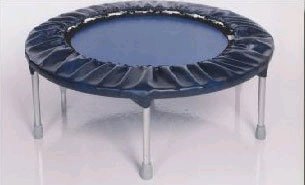
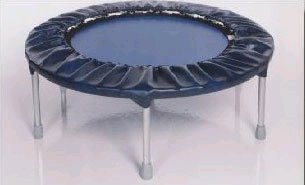
"Rebounder" is simply another word for "mini-trampoline," with rebounding becoming more and more popular these days. Yes, there are infomercials.

However, rebounders are not receiving the same criticisms as OmniGlides or AbTwisters. Rebounders are receiving rave reviews from expertsand laypeople alike.

User reviews are good: people are reporting that they stay with rebounding because it's fun and easy. And, some are reporting almost miraculous benefits from using a rebounder.

Jordan Rubin, author of The Maker's Diet, and nationally-recognized physical trainer JB Berns, creator of the UrbanRebounder, are both promoting rebounding as excellent exercise for all ages. Dr. Mercola admits to rebounding in front of the TV during the winter months. The Pacific Health Center has been recommending rebounding since the 1970s.

What's the big deal? Weather can't stop you. Age doesn't matter. Rebounders aren't that expensive. And the health benefits are enormous.

First, there's no structural trauma: going down, you hit the mat at 2X the force of gravity, but going up, you're weightless. Cool, huh?

This gravity business causes a pumping-type response inside your body that removes waste from cells and infuses them with oxygen and other nutrients. This gravity component makes rebounding a unique exercise.

Rebounding also reduces stress and creates nervous system equilibrium that stays with you after you stop rebounding. NASA reports that rebounding is 68% more efficient than regular running.

It is also unique in how it impacts your lymphatic system. This is a part of your circulatory system that deals with immune response and drainage. "Lymph" is a clear liquid, and it takes toxins, wastes, fat, viruses, and other mess away from the cells.

What rebounding does is move the lymph in three ways: muscular contraction from exercise and movement; gravitational pressure on the lymph vessels; and internal massage of the lymph vessel valves. And rebounding can increase lymphatic movement up to 15 times, better than than any other exercise, according to the experts.

How do you do it? After choosing a good rebounder, try these exercises from the Pacific Health Center:

1. Health Bounce - Just simple bouncing, even with your feet not leaving the surface of the rebounder, greatly stimulates lymphatic flow. The elderly or infirm can do this holding optional hand rails or a chair back next to the rebounder. They can also bounce in a seated position initially to get the lymph moving.
2. Running in Place - Perhaps the most basic exercise. It helps to alternate running in place with other exercises, so as not to get bored.
3. Twisting - Twist left and right with the hips and legs going one direction and the arms and chest going the other.
4. Kick Step - Alternately kick the left and right feet out in front of you as you bounce.
5. Jumping Jacks - Just like you would do on the ground, only you're bouncing on the rebounder while doing them.
6. Cross Crawl Bounce - This is great for left-brain, right-brain coordination. On the bounce, with straight, extended arms like a marching soldier, you place your left foot forward and right arm forward and across to the left. Reverse on the next bounce. Stimulating this bilateral motion is very energizing to the body.

March 18, 2006

Freebie Online - Fabulous Diet and Exercise Manager

FitDay is great - so great, it's a wonder that it's still free on the web. After using the freebie for a couple of years, I did splurge on the inexpensive software - but the freebie was more than enough for me for awhile and hey - it's free. Love this product, even though I may not love what it tells me (who knew there was so much fat in a peanut? in eggs? in my homemade soy smoothie?) ....

While the habit of inputing all that you eat and all the movement you make seems cumbersome, if not overwhelming, you get used to it. The more you input, the more you learn about the reality of your body and how much you're supporting it - or neglecting it. The inventory of items provided in the food selection is huge (yes, brand names and fast food vendors are included) and there is the opportunity to add your own items as well. Your homemade recipes can be inputed here, and broken down nutritionally.

According to the site, FitDay gives you:

weight loss

calorie counter
fat, protein, and carbohydrate intakes
metabolism & exercise calorie expenditure
weight loss tracking
weight loss goals and progress reports
caloric balance reports

good nutrition

food nutrition facts for any food
daily nutritional intakes
audit of personal RDAs
long term nutritional analysis
quick reference to Dietary Guidelines for Americans

peak fitness

exercise log
mileage/distance tracking
calorie expenditures
metabolism breakdown
analyze and graph mileage/distance

February 8, 2006

Heart Health 4 U


Better late than never, since February 3rd was National Wear Red Day ....

Forty percent (40%) of all heart attacks are caused by elevated Homocysteine levels. And, most heart attacks occur between 4 and 10 in the morning, did you know that?

Homocysteine is a toxic, endogenous, sulphydryl-containing Amino Acid and elevated levels of it (1) physically cause or significantly contribute to: Blood clots, high cholesterol, strokes, sickle-cell anemia, hearing problems, kidney stones, diabetic neuropathy, some types of cancer, Chronic Fatigue syndrome, psoriasis, fibromyalgia, osteoporosis, Rheumatoid Arthritis, Parkinson's disease; and (2) mentally cause: aggressiveness, dementia, depression, memory impairment, and schizophrenia.

You're at a bigger risk of having high homocysteine levels if you suffer from hypothyroidism or have Type 2 diabetes.

What causes high homocysteine levels?
1. Not enough folic acid
2. Alcohol
3. Tobacco
4. Caffeine
5. Stress.

What can you do to protect yourself and your loved ones?
1. Eat right - this includes lots of garlic and other things
2. Exercise - duh
3. Supplement your diet with certain things - which you might find ooky

Want details? Go read everything Valerie Saxion has to report in her show notes. It's detailed, and it's good. Do this, it's important.

January 20, 2006

Exercise Stops Alzheimer's Disease

Evidence is mounting that exercise prevents Alzheimer's as well as other types of senile dementia. In a recent study, healthy seniors exercising for fifteen minutes, three times a week, lowered their Alzheimer's risk by as much as 30 percent.

Reports USA Today, quoting Eric Larson, the study's lead researcher:

"The study, published today in the Annals of Internal Medicine, suggests that even a short, brisk walk every day might ward off the disease.

"'We don't know if exercise makes the disease go away,' Larson says, and the study doesn't provide direct proof that exercise will ward off dementia. Still, 'this is the best evidence you're going to get short of a clinical trial,' Larson says. To get hard proof, researchers will need to assign people to an exercise group or a control group and then keep track of them for many years."


Source: USA Today article appearing on January 17, 2006, written by Kathleen Fackelmann.
Related Posts Plugin for WordPress, Blogger...