
Showing posts with label Menu Planning. Show all posts
Showing posts with label Menu Planning. Show all posts
October 19, 2017
October 6, 2016
Thanksgiving Day is 48 Days Away: Planning Ahead
.
.
Thanksgiving is such a wonderful holiday. I hate that it seems to get lost between Halloween and Christmas - or at least that's how it seems out in the stores.
I saw Halloween stuff competing with Christmas decorations in the last week of September! Ye Gads.

Meanwhile, maybe some would say I'm just as bad. Why? I'm doing menu planning now. For Thanksgiving. Forty-eight days in advance. Yepper -- crazy, right?
Well, here's the thing. I'm participating in National Novel Writing Month in November, so I need to get ready for that added work load. (Which is writing 50,000 words or more in 30 days. I plan on writing a very bad first draft of a thriller novel. LOL)
But I might be planning for Thanksgiving this week anyway.
Why? It's gonna save me money and time and stress. And it makes me happy.
That is Simple Living, at least in my view.
How is it saving me money and time? Well, I'm planning the whole weekend. Bill will provide his famous hash brown and egg tacos, that's a tradition. There will be leftovers. Natch.
No one in this casa cares about Black Friday, so no worries there. Well, if there's an online special for a TV or laptop for a penny or a dollar, we might be a little interested. Maybe.
Football may be involved. To me, this means snacks. Walks in the park will occur. Naps. Soup. Movies. Fingers crossed, we'll have sweater weather!
Today, I'm going to have all the recipes together, including the snacks and the drinks, right in front of me. I'm buying in bulk at Sam's Club -- and watching the food ads -- for things I can store or freeze and have ready come T-Day.
I'm looking for deals. (Yesterday, I found a nice price for pecans at HEB.)
I'm keeping the recipes simple, too. No Bon Appetit here. Simple stuff. Good stuff.
Plus not so many choices. Two desserts. One kind of coffee. Chips and queso. Turkey Chili. Iced Tea. You get the idea.
I'm excited thinking about Thanksgiving. Counting blessings; eating queso while watching an Alfred Hitchcock movie; the turkey-induced nap.
I'm plotting things that are fun and free. Walking in the park, bringing bread to feed the ducks and geese while the dogs sniff the goose poop? This costs nothing and it's amazing. Memory-making.
Ditto the movie night with popcorn and classic movies. At some point, there may be watching sports on TV; I never do this -- but I'll be writing that thriller novel. As long as no one is hogging the chili con queso, we'll all be fine.
Oh, my, this is fun!!! I like this planning ahead plan. It makes me happy. Maybe it will bring a smile to your face, too, Dear Reader.
.
Thanksgiving is such a wonderful holiday. I hate that it seems to get lost between Halloween and Christmas - or at least that's how it seems out in the stores.
I saw Halloween stuff competing with Christmas decorations in the last week of September! Ye Gads.

Meanwhile, maybe some would say I'm just as bad. Why? I'm doing menu planning now. For Thanksgiving. Forty-eight days in advance. Yepper -- crazy, right?
Planning Ahead for Turkey Day
Well, here's the thing. I'm participating in National Novel Writing Month in November, so I need to get ready for that added work load. (Which is writing 50,000 words or more in 30 days. I plan on writing a very bad first draft of a thriller novel. LOL)
But I might be planning for Thanksgiving this week anyway.
Why Plan for Thanksgiving Now?
.Why? It's gonna save me money and time and stress. And it makes me happy.
That is Simple Living, at least in my view.
How is it saving me money and time? Well, I'm planning the whole weekend. Bill will provide his famous hash brown and egg tacos, that's a tradition. There will be leftovers. Natch.
No one in this casa cares about Black Friday, so no worries there. Well, if there's an online special for a TV or laptop for a penny or a dollar, we might be a little interested. Maybe.
Football may be involved. To me, this means snacks. Walks in the park will occur. Naps. Soup. Movies. Fingers crossed, we'll have sweater weather!
Today, I'm going to have all the recipes together, including the snacks and the drinks, right in front of me. I'm buying in bulk at Sam's Club -- and watching the food ads -- for things I can store or freeze and have ready come T-Day.
I'm looking for deals. (Yesterday, I found a nice price for pecans at HEB.)
I'm keeping the recipes simple, too. No Bon Appetit here. Simple stuff. Good stuff.
Plus not so many choices. Two desserts. One kind of coffee. Chips and queso. Turkey Chili. Iced Tea. You get the idea.
I'm excited thinking about Thanksgiving. Counting blessings; eating queso while watching an Alfred Hitchcock movie; the turkey-induced nap.
I'm plotting things that are fun and free. Walking in the park, bringing bread to feed the ducks and geese while the dogs sniff the goose poop? This costs nothing and it's amazing. Memory-making.
Ditto the movie night with popcorn and classic movies. At some point, there may be watching sports on TV; I never do this -- but I'll be writing that thriller novel. As long as no one is hogging the chili con queso, we'll all be fine.
Oh, my, this is fun!!! I like this planning ahead plan. It makes me happy. Maybe it will bring a smile to your face, too, Dear Reader.
September 12, 2016
Choosing the Kind of Paper Planner for Managing Your Time: My Road to Planner Peace
Time Management Tools: I prefer the old school paper and pen approach.
Productivity and time management are popular topics these
days – but most of the stuff that I read on the web has to do with
software. Calendars like those offered
by Google; task lists and project management that can be coordinated between
phones and laptops through online tools like Trello
or Asana.
Sure, I use Google Calendar.
I like it. However, when it comes
to keeping track of my time, from my calendar for the week or month, to how I
will be spending my day, I prefer to use pen and paper.
That’s right. I use
a physical planner made of paper, and I don’t use a time management system that
appears on a screen.
.
.
Why I Like Paper Planners Instead of Online Time Management Tools
.
Why a paper planner? I
enjoy them. It’s fun to use a paper planner. Fine!
Okay. I love pens.
Pens!!!
Blue ink, black ink, green, red, or purple: always a fine point,
preferably an extra fine. I like to
write as much or more as I like to type.
Plus I like buying pens.
Using planners is another reason to feed my pen habit.
Some people like shoes, I like pens.
However, I do think that working with a paper planner works better for me. It makes me stop and think in more detail about how I will be spending my time – it’s too easy for me to type in an entry here or there and keep going without much thought.
.
Writing the events into the paper planner’s calendar makes them more of a commitment, somehow.
Writing the events into the paper planner’s calendar makes them more of a commitment, somehow.
Deciding how I am going to delegate my 10 hour work day between three rush projects is less stressful for me when I’m using pen and paper.
Maybe I’m strange in this; maybe not. I just know what works best for me, and it’s
not keeping track of time on a computer screen.
.
.
Different Kinds of Paper Planners and Finding Planner Peace
.
Not that dedicating myself to paper planners for my time
management has been the end of the road in decision-making here. Nope.
Why? For me, once I
got to the stage of deciding I would be using a paper planner, then I had to
decide which kind of paper planner I wanted, and which system I preferred.
There’s a phrase to describe this process: it’s the search for “planner peace.”
And I’ve learned that if you do find your planner peace, don’t
get comfortable – as time goes on and your life evolves, that peace may
evaporate and you’ll be back on the hunt again.
Not to say this doesn’t have its perks. For one thing, you
may have more excuses (ahem, reasons) to buy fun things like stickers … and
pens!!!
.
.
6 Kinds of Paper Planners - My Reviews
.
There are all sorts of paper planners out there. Here are six that I’ve personally tested and
liked, for various reasons.
.
.
Franklin Covey Planner
I used a Franklin
Planner for many, many years. The
most that I ever did was change the size.
I’ve had them all: Classic, Pocket, Compact, and Monarch. The key thing about using a Franklin Planner
is the system it provides: you are working
with a planning system
set up to sync with Stephen Covey’s book 7 Habits of Highly Effective People.


You can use these paper planners without reading the book or
going to the Franklin Covey classes, sure, but these planners work best if you
understand them as tools for this approach to time management.
What I like best about these planners: the time sheet feature, where you can keep
track of your day as it progresses.
Reminds me of my years as a Baby Lawyer, writing down my time on my time
sheet each afternoon before I left the office.
DayRunner Planner
The Day Runner Planners are designed to compete with Franklin Covey. They cost less. Similar additions are available for purchase,
too: things like contact Information lists; lined paper pads; pocket dividers;
etc.
You can get them at your local office supply store, which is really convenient. (And it’s so near their pen aisle.)
You can get them at your local office supply store, which is really convenient. (And it’s so near their pen aisle.)


BlueSky Planner
When I first veered away from Franklin Covey-esque Planners, and I
admit to feeling a bit rebellious in doing so, I bought a Blue Sky Planner at
Border’s Book Store. Since Border’s is
long gone, that should give you a hint on how long ago this happened, right?


Mine was pink. It was
pretty.
How did it work for me?
Well, it was a change. Here, there’s a spiral ring binder system holding
your planner’s inner workings together.
No ring binder like the Franklin Planner, which I did come to miss. I like adding things into my planner – it’s
not the same to clip or tape something into a spiral bound planner as it is to
punch holes and insert it into the rings.
I like that.
However, I did enjoy the ease of use here. Less muss and fuss. I didn’t have to ask myself if I was “SharpeningMy Saw” (a key component of the Franklin system).
However, it didn’t offer me a daily time sheet and I missed
it. Plus, I started making my own To Do
Lists on separate paper (or index cards), which I clipped into the Blue Sky
Planner. That got bulky and hard to
control.
So, my search continued.
Tools for Wisdom Planner
My next step in my search for planner peace was a
Tools4Wisdom Planner.
I bought this one off of Amazon after searching online about planners for a bit. It seemed to combine what I liked about the Franklin, which is the ability to keep track of my time during the day, with the more informal and light approach to time management.
 It had pretty graphics with inspirational
quotes, for instance.
It had pretty graphics with inspirational
quotes, for instance.
I bought this one off of Amazon after searching online about planners for a bit. It seemed to combine what I liked about the Franklin, which is the ability to keep track of my time during the day, with the more informal and light approach to time management.
 It had pretty graphics with inspirational
quotes, for instance.
It had pretty graphics with inspirational
quotes, for instance. 
And while it was
another spiral binder, I was willing to get it a try.
I don’t think it lasted the year.
Happy Planner
After the Tools for Wisdom fiasco, I tried using online time
management tools for a bit. It didn’t
feel right for me. I wanted to go back
to paper, but not to Franklin Covey – though I was leaning toward returning to
them when I discovered the Happy Planner.
For many, a Happy Planner is a less expensive alternative to
an Erin
Condren planner. I get that.


However, I was none too sure about using one
of these whimsical planners, where a new world of stickers and washi tape
(what, washi tape?!! Oh my!!! Fun stuff!!!) was open to me.
I suppose you could put some washi tape on a Franklin Covey
planner, and I did try it. It felt
bad. It just seemed wrong somehow.
But washi tape on a Happy Planner? Zowie!
That was fun. Stickers on a Happy
Planner? Ditto.
I bought a Happy Planner with a coupon at Hobby Lobby for around ten bucks. That's simple living, folks ... and I was happy right off the bat, when I compared that price tag to a comparable Erin Condren! (Not that they aren't nice, of course.)
I bought a Happy Planner with a coupon at Hobby Lobby for around ten bucks. That's simple living, folks ... and I was happy right off the bat, when I compared that price tag to a comparable Erin Condren! (Not that they aren't nice, of course.)
I'm so grateful for that Happy Planner. I learned that having this planner freed me somehow,
allowed me to be creative in building my monthly plan, or weekly plan.
This was fun, and it brought me back to that planner more and more often just because it was a pleasure to work with all this creative stuff. I used it more. I got more done. That's key.
This was fun, and it brought me back to that planner more and more often just because it was a pleasure to work with all this creative stuff. I used it more. I got more done. That's key.
Now, Happy Planners don’t have a time sheet function. That’s a problem. However, they do come in a format that breaks
each day into “morning,” “afternoon,” and “evening,” which I like. So it has time blocks, but not the actual
hours.
There are horizontal spreads and vertical spreads (I prefer the
vertical). And they do have a nifty ring-binder like method of holding the pages together. See those gold gizmos on the side in the image? Martha Stewart likes these gizmos, she sells a planner version with its disc-binding at Staple's, I believe.
As for the Happy Planners, they do make me happy. I still use one today, but they aren’t
the ones that I think are bringing me planner peace. At least, not by themselves.
For that, I’m able to pick up just about any
paper notebook because I’ve discovered Bullet Journaling.
Bullet Journaling with a Moleskine
Today, I have a blue Moleskine notebook that I call my “Blue
Brain” and here I track my goals, my projects, the meals I eat, well … just
about everything. I use all sort of pens
here, and I get to try out my cursive handwriting as well as doodles, too.


I have a second basic notebook, leather and a
Moleskine-wannabe, that I use specifically for my daily stuff. Each day, day by day, is recorded in
here.
My month at a glance remains in my Happy Planner. Ditto my Week at a Glance.
My month at a glance remains in my Happy Planner. Ditto my Week at a Glance.
But the guts of my day gets recorded using the bullet
journaling method. This includes diary
entries as need be.
Keeping track of all my personal stuff that I will need over
time goes in the Blue Brain.
This is working for me … for now.
Have I achieved planner peace? Maybe I have. I think so.
March 13, 2012
Cheap Protein Sources to Consider When Planning Your Menu and Making Your Grocery List
For those living a voluntary simplicity lifestyle, being smart on the food budget is just part of maximizing the monthly disposable income. However, in the years since I began living this way, I've seen more and more people that are simplifying their lives because they have to do it: it's a financially necessity to live with less material stuff and a smaller budget.
These folk may not know how to cook, and they may be bummed that they have to cut back. To them, I say - hey, there's a silver lining here! There's fun in your future that you wouldn't have found if you hadn't had to start budgeting things.
Like learning all about cheap protein sources and using them in your menus. There's some major good eating here as well as some very healthy things for you and yours, which someone who's eating out a lot or buying lots of prepackaged stuff or fast food take out is going to miss.
Cheap Sources of Quality Protein
The reason that you want to know cheap sources of protein is because protein can take the biggest chunk out of your monthly food budget. Meat - beef, pork, chicken, fish - costs a lot and you buy it by the pound. To get control of your food money for the month, it's a big target.
The silver lining is while you are buying protein options to beef, pork, chicken, fish that you are also getting some very nutritious stuff. Stuff that can be lots better for you than the steak that you're not buying any more.
Consider buying these cheap sources of protein (gram info from nutritiondata.self.com unless otherwise linked):
And if you have to buy meat, then consider these two options before you go over to the Meat Department:
Just because a food item has lots of protein in it, you're not done. Another consideration is whether or not it has all NINE essential amino acids in it, which then makes that food a "complete protein."
Of the items listed above, only the canned meat, the soy stuff, and the quinoa are complete proteins. Which doesn't mean that the others aren't great, too .. just something to consider.
And yes, you can combine things to make a complete protein. Rice and beans together, as shown above, make a complete protein. So does smearing almond butter onto toast.
Here's the Thing: This Stuff Tastes Great.
Almonds? They're great. Raw, in salads, pureed into butter. Major yum here. Red beans and rice, or what we have here in San Antonio, pintos and rice? Great stuff.
The greek yogurt is addicting, at least for me, when you add some stevia for sweetness and some pumpkin pie spice to the nonfat vanilla flavor. Better than ice cream for dessert and I am not kidding you or deceiving myself. Try it for yourself.
Quinoa? I cook this in the microwave after learning about this on a Melissa D'Arabian show and it works great. (Try her recipe which has 100 five star reviews at the time that I inserted this hyperlink for her lentil quinoa salad.) And you can buy this seed, it's not a grain, made into all sorts of pasta shapes at World Market, among other places. Elbow. Spaghetti.
You get the idea. Simple living is just filled with all these discoveries. You really do say "wow" a lot, and I'm still doing it after all these years. It's fun!
These folk may not know how to cook, and they may be bummed that they have to cut back. To them, I say - hey, there's a silver lining here! There's fun in your future that you wouldn't have found if you hadn't had to start budgeting things.
Like learning all about cheap protein sources and using them in your menus. There's some major good eating here as well as some very healthy things for you and yours, which someone who's eating out a lot or buying lots of prepackaged stuff or fast food take out is going to miss.
Cheap Sources of Quality Protein
The reason that you want to know cheap sources of protein is because protein can take the biggest chunk out of your monthly food budget. Meat - beef, pork, chicken, fish - costs a lot and you buy it by the pound. To get control of your food money for the month, it's a big target.
The silver lining is while you are buying protein options to beef, pork, chicken, fish that you are also getting some very nutritious stuff. Stuff that can be lots better for you than the steak that you're not buying any more.
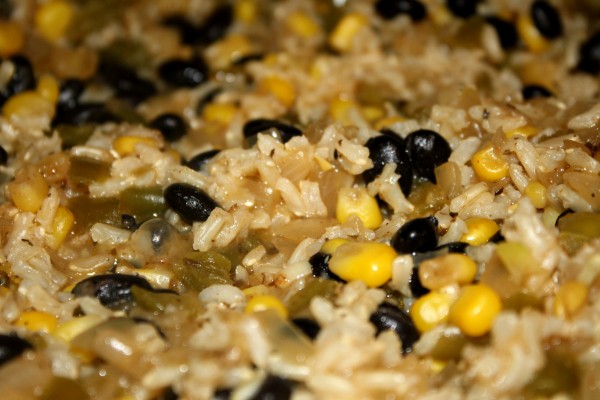 | |
| Black Beans and Rice Dish | Public Domain Image |
- Eggs - 4 grams per large, fresh egg
- Quinoa - 8 grams in a serving
- Whey Protein Powder - 19 grams per 1 cup
- Milk - 10 grams in a serving of nonfat, protein fortified
- Cottage Cheese - 28 grams in 1 cup, lactose reduced
- Greek Yogurt - 16 grams in 6 oz serving (I like Chobani Vanilla Nonfat with stevia added to it)
- Beans and Rice - 9 grams in 1 cup of rice and beans combo
- Soy Products - 68 grams in 1 cup of soy nuts
- Tempeh - 31 grams in 1 cup
- Almonds 6 grams per ounce
And if you have to buy meat, then consider these two options before you go over to the Meat Department:
- Canned Tuna in Water - 39 grams in 1 cup of solid white tuna in water, drained
- Canned Mackerel - 44 grams in 1 cup of mackerel, jack, drained
- Canned Sardines - 23 grams in 1 can of sardines packed in oil, drained
Just because a food item has lots of protein in it, you're not done. Another consideration is whether or not it has all NINE essential amino acids in it, which then makes that food a "complete protein."
Of the items listed above, only the canned meat, the soy stuff, and the quinoa are complete proteins. Which doesn't mean that the others aren't great, too .. just something to consider.
And yes, you can combine things to make a complete protein. Rice and beans together, as shown above, make a complete protein. So does smearing almond butter onto toast.
Here's the Thing: This Stuff Tastes Great.
Almonds? They're great. Raw, in salads, pureed into butter. Major yum here. Red beans and rice, or what we have here in San Antonio, pintos and rice? Great stuff.
The greek yogurt is addicting, at least for me, when you add some stevia for sweetness and some pumpkin pie spice to the nonfat vanilla flavor. Better than ice cream for dessert and I am not kidding you or deceiving myself. Try it for yourself.
Quinoa? I cook this in the microwave after learning about this on a Melissa D'Arabian show and it works great. (Try her recipe which has 100 five star reviews at the time that I inserted this hyperlink for her lentil quinoa salad.) And you can buy this seed, it's not a grain, made into all sorts of pasta shapes at World Market, among other places. Elbow. Spaghetti.
You get the idea. Simple living is just filled with all these discoveries. You really do say "wow" a lot, and I'm still doing it after all these years. It's fun!
January 6, 2012
Television Benefit: Melissa D’Arabian and Her Ten Dollar Dinners – Great Food Fast and Cheap
Television. It can be so good or so bad, depending upon how you use it. I suppose this is true for most things, now that I think about it. One of the great things about TV for me, at least, are the cooking shows. I have truly learned how to cook from watching PBS shows like America’s Test Kitchen and other channel shows (I like Mad Hungry but I don’t follow it regularly).
However, there is one cooking show that I think stands head and shoulders above the rest, from a simplicity perspective. It delivers on a promise to feed four a complete dinner for ten bucks and with good, tasty food to boot.
It’s Ten Dollar Dinners with cook Melissa D’Arabian on the Food Network.
What’s the big deal?
Well, the recipes don’t taste good, they taste great. And they don’t take many ingredients. (Good for time and for money.) And they are easy to put together. It’s simple living in a kitchen.
Now, you can follow the recipes online or in Melissa D’Arabian’s cookbook and that’s fine. That will get you there. There’s an added benefit of watching her TV shows, though. Maybe more than one.
In her show, where she’s cooking a $10 Dinner on the TV screen, Melissa D’Arabian adds tips and tricks that are great and that you don’t get in the books or recipes. Thinks like buy up Italian sausage when it’s on sale and freeze it. Buy milk that’s about to hit its expiration date by going to the grocery store early in the morning (she goes around nine o’clock) – if your family drinks dairy.
You get the idea, Dear Reader.
I am a big, big fan of Ten Dollar Dinners and Melissa D’Arabian and I think, Dear Reader, you might like what she’s doing, too.
January 4, 2012
Poached Eggs: Cheap, Fast, and Easy to Cook
First things first, eggs have their critics but ignore them right now because poached eggs are a good thing to know how to cook. And poached eggs are a great thing to have in your family menu plan.
They are cheap. They are easy. And poached eggs can be used in so many ways: breakfast, lunch, and dinner.
Here’s the thing: they can be hard to do. Some say. I haven’t had a big problem – but I do a couple of things that help. First, I never think I am so clever at cooking that I can just dump an egg into the water. I always use a little cup to gently lower the egg into the pool. One at a time. Slowly.
Also, I don’t let the water boil … I let the water get just … about … to boiling, then the eggs go into the bath.
And, I’ve done it without vinegar. It will work if you don’t have vinegar handy. (I’ve also used rice vinegar, balsamic vinegar, whatever was in the pantry, and things turned out fine. You so have a taste difference, but that’s not a bad thing.)
Here’s the deal. Eggs are cheap. Poaching means no fat to cook them. And the runny centers are KEY to how these things can spark up a salad or a sandwich.
For more:
Here’s step by step instructions on poaching.
Here’s a recipe for a great salad using poached eggs.
As for sandwiches, I like a runny sandwich (wet, to coin a famous author of murder mysteries). I like to take great bread, homegrown tomatoes, thinly sliced cheese, some dijon mustard or yes some Miracle Whip or both, lotsa romaine lettuce, and get all that ready for a poached egg to set on top. Smush together. The egg oozes. It’s hot, it’s oh so good. And doesn’t cost much.
Yum.
January 11, 2010
10 Ways To Avoid Overspending at the Grocery Store
Let's face it -- grocery stores want to make a profit just as much as any other business, and while their profit margins are notoriously low, they can and do have lots of subtle ways to get you to spend cash on their products.
Here's 10 ways to stop yourself from spending more dollars than you should at the supermarket:
1. Never go to the grocery store hungry. If you're parking in their lot and your stomach's growling, then take the 5-10 minutes to chow down on a snack at their little cafe or deli (most of them have these now), or get a yogurt smoothie, cold organic juice, or protein drink and guzzle that down (show the empty container to the cashier at check-out, you're not going to get stopped in the store for drinking the stuff while shopping). Don't roam those aisles on an empty stomach!
2. Shop once a week for perishables, biweekly or monthly for staples. Fresh fruit and veggies need to be replenished more often than toilet paper, but not every trip to the grocery has to be a Major Event. Have a plan for your non-perishables (personal hygiene items, canned goods, etc.) and buy them once or twice a month. Bigger packaging means less cost per ounce, etc. but make sure to check the unit price on the item, don't just assume bigger means cheaper. CostCo and Sam's are great places to buy things like this -- toilet paper, pickles, beans, rice, things like that. Have a weekly run for the stuff that goes bad -- bananas, milk, stuff like you want to eat fresh.
3. Never enter a grocery store without a list. Make a list of what you need -- go thru the house, keep a running list on the fridge. When you're in the store, only buy what is on the list. If you're new to this, trust me -- it gets easier over time.
Here's 10 ways to stop yourself from spending more dollars than you should at the supermarket:
1. Never go to the grocery store hungry. If you're parking in their lot and your stomach's growling, then take the 5-10 minutes to chow down on a snack at their little cafe or deli (most of them have these now), or get a yogurt smoothie, cold organic juice, or protein drink and guzzle that down (show the empty container to the cashier at check-out, you're not going to get stopped in the store for drinking the stuff while shopping). Don't roam those aisles on an empty stomach!
2. Shop once a week for perishables, biweekly or monthly for staples. Fresh fruit and veggies need to be replenished more often than toilet paper, but not every trip to the grocery has to be a Major Event. Have a plan for your non-perishables (personal hygiene items, canned goods, etc.) and buy them once or twice a month. Bigger packaging means less cost per ounce, etc. but make sure to check the unit price on the item, don't just assume bigger means cheaper. CostCo and Sam's are great places to buy things like this -- toilet paper, pickles, beans, rice, things like that. Have a weekly run for the stuff that goes bad -- bananas, milk, stuff like you want to eat fresh.
3. Never enter a grocery store without a list. Make a list of what you need -- go thru the house, keep a running list on the fridge. When you're in the store, only buy what is on the list. If you're new to this, trust me -- it gets easier over time.
January 8, 2010
Menu Planning for Those Who Hate to Plan

And you hate the idea of planning a menu for you and your family. You won't know what mood you're in next Tuesday. The kids are picky. Still, cash is going down the drain so it's probably a good idea to investigate how to save some on your food dollars.
Surf the web, and you'll find a lot of information regarding menu planning. You can buy software, you can download templates. You can read a lot of articles and blog posts offering advice on how to budget your grocery dollars.
It can be overwhelming, especially if you don't have much time and you either can't cook, or don't want to spend lots of time in the kitchen. Not everyone is a fan of the Food Network.
So, here's an alternative that's easy and fast. Start with breakfast.
That's right. Breakfast is a simple meal, and for most folk it's probably pretty repetitive already. The kids have cereal, you have a bagel. Coffee, juice, milk. Or you drive thru to get an egg sandwich or a taco on the way to work, forget even having food at home. Maybe you expand things on the weekend, serve up pancakes or Eggos or heck, even an omelette.
Planning your breakfast food costs will save you money. This is especially true if you're buying restaurant/fast food items.
So, begin your menu planning with your first meal of the day. Plan in advance what works best for you. Does couponmom have some deals right now? Incorporate them. On the weekends, can you make pancakes from batter instead of using frozen Eggo waffles? (Pancakes are really easy, if you're not asked to flip them.) Great! Making those pancakes will save money and it's more fun, too. Plus, you can sneak in nutritional stuff like whole wheat, berries, and bananas into the pancakes and get some nutrition down the kiddos (and yourself) while you're at it.
Master breakfast. And when you're feeling so proud of yourself about breakfast, ponder taking on LUNCH.
You get the idea.
For more information on menu planning, check out:
Fifteen Tips for Maximizing Your Food Budget
Going Organic - Step One
Menu Planning 101
Menu Planning 102
August 27, 2008
5 GOOD CHEAP RECIPE COLLECTIONS
There are some sites that discuss eating healthy, eating organic, eating frugally -- but what about some recipe collections where the food is good and the cost is almost pennies?
Here are five online recipe collections with really good and CHEAP recipes:
Miserly Moms' Frugal Recipes
Cheap Eats - $3 or Less
Budget 101's Dirt Cheap Ramen Noodle Recipes
Recession Recipes
Cheap Recipes at Gather.Com
Granted, some of the ingredients may include processed food (for example, canned biscuits in the Miserly Moms' Cheesy Pull-Apart Biscuits, Recipe No. 184) and they may include food with debatable nutrients (e.g., the iceberg lettuce in Recession Recipes' Iceberg Lettuce Soup), but you can always play around with these recipes -- one of the fun things about cooking anyway -- to suit yourself.
For example, cabbage is cheap and very nutrious. Maybe you substitute that for the iceberg lettuce in the soup recipe. Or you take the time to make biscuits from scratch - anything processed costs more, so you'd theoretically be saving even more money if you circumvented the canned biscuit dough....
These collections give you more than just the recipes themselves. If you go surfing through them, you'll discover themes and patterns that will help you a better shopper and a better cook. Study them, and you'll learn more than just a new dish for the family menu.
For more information:
How to Cook 4: Beans Are Easy, Cheap, and Good
Menu Planning 102
Menu Planning 101
Here are five online recipe collections with really good and CHEAP recipes:
Miserly Moms' Frugal Recipes
Cheap Eats - $3 or Less
Budget 101's Dirt Cheap Ramen Noodle Recipes
Recession Recipes
Cheap Recipes at Gather.Com
Granted, some of the ingredients may include processed food (for example, canned biscuits in the Miserly Moms' Cheesy Pull-Apart Biscuits, Recipe No. 184) and they may include food with debatable nutrients (e.g., the iceberg lettuce in Recession Recipes' Iceberg Lettuce Soup), but you can always play around with these recipes -- one of the fun things about cooking anyway -- to suit yourself.
For example, cabbage is cheap and very nutrious. Maybe you substitute that for the iceberg lettuce in the soup recipe. Or you take the time to make biscuits from scratch - anything processed costs more, so you'd theoretically be saving even more money if you circumvented the canned biscuit dough....
These collections give you more than just the recipes themselves. If you go surfing through them, you'll discover themes and patterns that will help you a better shopper and a better cook. Study them, and you'll learn more than just a new dish for the family menu.
For more information:
How to Cook 4: Beans Are Easy, Cheap, and Good
Menu Planning 102
Menu Planning 101
April 28, 2008
How to Cook - 4: Beans Are Easy, Cheap, Good
 Beans are so humble, unless you consider the hericot vert. Always the bridesmaid and never the bride in any menu, beans are nevertheless so varied, so favorful, so nutritious, and so cheap, that they're just plain smart to buy and serve your family.
How to Cook Beans
1. The Traditional Way.
My mother taught me to pour the bag of beans onto the kitchen table, and to slowly pull bean by bean off the edge and into a large, deep bowl. This eliminated any small pebbles that managed their way into the packaging. Once the beans were safely culled and transferred into the big bowl, the bowl was filled with water, covered with a cheesecloth, and left to set overnight.
The next day, the beans would have puffed up with all the water, and they were ready for the big Bean Pot. (Yep, my mom had a special pot just for beans. Here in Texas, refried beans and pinto beans are important parts of both TexMex meals as well as any respectable barbeque.)
The beans were drained and placed into the pot (draining being important to stave off (ahem) gas (ahem), and seasonings were added. After being brought to a boil, the heat was lowered and the beans sat on the back burner, simmering away; their smell filling the house with that great cozy feeling of something cooking on the stove. Periodically, you checked the pot and stirred the beans, adding water if it was needed, until the beans were done.
2. The Slow Cooker Way.
This is a method I've tried when I've been under a deadline and not able to watch the bean pot (yep, I have one of my own now) during the day -- or when I wake up and remember that I forgot to soak the beans. You still cull the beans, although it's been awhile since I've found a pebble in my beanbag, but you omit the overnight soak. Pour your culled beans into a large slow cooker, add your seasonings, and fill with water. Turn it to the low setting. You want lots of water here, bean juice isn't a bad thing if you've been generous on the water, but it's trouble if those beans don't have enough water here: they didn't get their soak time, and they have to hydrate. They're starting out dried, remember. Around eight hours later, you'll have a nice batch of beans.
Different Beans to Try, Seasonings to Use, Meals to Make, Why Bother
Types of beans
Pinto beans
Kidney beans
Butter beans
Black beans
Lima beans
Navy beans
Azuki beans
Seasonings
Onion
Garlic
Salt Pork
Bacon
Ham
Chicken
Chilis
Pepper
Salt
Cilantro
Tomatoes
Good Recipe Sites
Crockpot Beans - lots of recipes here
The Bean Bible
Why Beans?
Beans are among the best buys in the marketplace. They're very economical - plus they are very, very nutritious. Studies show they fight colon cancer, if eaten several times a week. Eat them with rice, and you have a complete protein substitute which is good for you and great for your budget.
November 26, 2007
15 Tips for Maximizing Your Food Budget
 This month, the Center for Nutrition Policy issued a new pdf: "Low Cost, Medium Cost and Liberal Food Plans - 2007," revising a previous version of alternative food budgets. (The low cost plan is designed to work with someone feeding a family on food stamps.)
 It's too hard to read, and I'm not sure what to think about all its data, anyway. So, I've compiled this list of 15 tips for maximizing your food budget:
1. Buy store brands - they're cheaper.
2. Use coupons - take an hour a week to track them down in the newspaper, mailbox, and online. Organize them according to area of the store (dairy, meat, etc.) and within that category, by expiration date. (If you're lucky, your store has its own promotional coupons, too - here in San Antonio, HEB has lots of promos plus a coupon kiosk near the customer service area). It doesn't take that long, and you can use the rest of the time to plan meals.
3. Shop on double coupon day. (Here in SA, that means Sun Harvest; HEB doesn't offer double coupon days.)
4. Plan your weekly menu to maximize the coupons.
5. Shop with a grocery list and stick to that list.
6. Do not buy junk just because you have a coupon. If the kids hate powdered donuts, don't buy them just because they're on sale. If you are into eating organic, then don't compromise just because Cocoa Puffs are 3 for a dollar. Rule the coupons, don't let them rule you!
7. Compare the unit price. Something on sale with a coupon may still cost more than the store brand.
8. Cook from scratch as much as possible: the more preparation in the item, the higher the price.
9. Organize your kitchen (freezer, fridge, pantry) as well as a little storage area elsewhere. A big sale on toilet paper may be worth stocking up - but you will need the extra space. Similarly, cooking a big batch of chili or stew may mean you freeze half for later: it's better to have an organzed freezer (not only to have a place for the item, but to remember it's there and not have it hidden for archeologists in the back right corner ...).
10. Eat your leftovers. Rework them if your family is picky about this - Food Network's Robin Miller (contributing editor for Health and Cooking Light ) has an entire show dedicated on revamping a food item in 3-4 ways for use during the week. Chicken breasts one night become shredded bbq chicken sammies the next, etc.
11. Keep a Food Journal. Yes, this sounds hokey -- but it can be a simple spiral notebook and it's purpose is to keep track of what's working and what's not. It doesn't have to be pretty. If the family loved your Organic Mac and Cheese Bake, then make a note of this. If they hated the 12 grain bread, note it. Slowly, you'll build a list of recipes that the family likes and this will make menu planning a lot easier. The Journal should also keep track of big sales -- stores tend to put things on sale on a schedule and as you gain control of this info, you'll be able to plan ahead for the sale items. I also take my journal with me to Sam's, HEB, etc. and write down prices for things that I buy a lot. It's helped me discover that the paper towels at Walmart are a better deal than Sam's, and I was just assuming that Sam's had the best deal.
12. Cook in batches. Buying in bulk (like at Sam's or CostCo) can get you a better unit price. You can break these apart and freeze parts. You can also stretch these buys through cooking a big batch and then freezing part of the entree for later. Examples: a big pot of chili, freeze half; a huge meatloaf, freeze half; broccoli-rice casserole, freeze half. You get the idea.
13. Learn to cook great vegetables that are cheap. Cabbage, greens, turnips, beets, yams, these are great foods, they are cheap foods, and you need to take advantage of them. A big pot of greens on a cold winter day, with cornbread and sweet butter? There's nothing better. Like Chinese food or Thai? Lots of cabbage potential there. Explore.
14. Find alternatives to meat. Beans and rice together make a complete protein. Cajun recipes and TexMex recipes combine them both. A favorite in my house are bean cakes - they can be crispy and spicy and very delicious as an entree and again as a sammie. Lots of variety here, lots of nutrition, and soooo cheap.
15. Reward yourself for a job well done. This whole thing should be fun, not a chore. Find the joy in all this ... it's there. Great food, great nutrition, and great savings.
October 22, 2007
Have You Had a Bad Reaction to MSG?
 MSG (Monosodium Glutamate) is added to foods as a taste enhancer. The FDA says MSG is safe, except for some folk to take too much of it, or those who suffer from asthma.
 At MSGTruth.Org, there is a long research list that begs to differ. There's also NoMSG.com, a consumer group site battling against MSG; MSGMyth.com, a reference website compiled by Debbie Anglesey; MigraneWeb.com, which has a section of its site dedicated to MSG; and the British watchdog group's FedUpWithFoodAdditives.Info's fact sheet on MSG.
Yes, it's controversial. A nice, concise summary of that controversy is found on the British fact sheet.
For those who have had a reaction to MSG, there's no debate. Also called "Chinese Restaurant Syndrome," reactions to MSG can range from feelings of nausea to migranes, dizziness, and heart palpitations. It can trigger asthmatic attacks. And, it's not a quick response/recovery: it takes a good couple of days to bounce back from an MSG reaction according to the University of Illinois Medical Center.
There are those that argue that long term effects of MSG can include Parkinson's Disease, Alzheimer's Disease, Autism in children, Diabetes (I and II), and obesity in children and adults. (Yes, MSG is argued to cause you to want to eat more.)
Both sides can agree on one thing: too much MSG will cause bad reactions in humans. The FDA report suggests that amount to be around 3 grams. And, with the growing list of foods containing MSG, perhaps it's not too hard to imagine that more and more people are getting excess MSG in their diets ....
From MSGTruth.Org, a partial list of common foods with MSG (go to link for complete list):
McDonald's French Fries
Doritos®
KFC® fried chicken and most of their other products
Progresso® Soups - all of them
Kraft® products nearly all contain some free glutamate
Planters® salted nuts - most of them
Accent® -this is nearly pure MSG
Braggs® Liquid Aminos - sold at Whole Foods
processed cheese spread
supermarket poultry or turkeys that are injected or "self-basting"
flavored Ramen noodles
boullion - any kind
flavored potato chips
soy sauce
Worcestershire sauce
Parmesan cheese - naturally high in free glutamate
From Rense.com, a partial list of ingredients that all mean the same thing, MSG has been added, quoting from Excitotoxins - The Taste That Kills by Russell Blaylock, MD:
Monosodium Glutamate
Hydrolyzed Vegetable Protein
Hydrolyzed Protein
Hydrolyzed Plant Protein
Plant Protein Extract
Sodium Caseinate
Calcium Caseinate
Yeast Extract
Textured Protein (Including TVP)
Autolyzed Yeast
Hydrolyzed Oat Flour
Corn Oil
And, if that's not enough, there's also the ingredient "natural flavor" or "natural flavoring." Yep, you guessed it: another synonym for MSG.
Personally, I believe MSG is bad for me and I avoid it. I know enough to know that Panda Express Gourmet Chinese Food takeout causes me to feel terrible the next day -- but my real testimonial comes from some flavored Kettle Chips (Maui Onion) that I splurged on, even though I usually avoid fried potato chips. Bad reaction (including dizziness, which was scary), and the cause? MSG.
June 4, 2007
Food as Medicine: Juicing

Jack LaLanne swears by juicing so much that he's got his own juicer on the market. There's also Jay Kordich aka the Juiceman, who has spent his lifetime promoting juicing of raw fruits and vegetables as a health necessity.
Of course, there are skeptics. They argue things like you get too much sugar, too rapidly, from juicing. They argue that there's a reason to chew, it's healthy to do so. Things like that.
However, juicing proponents are not arguing that juicing should substitute for eating foods (as opposed to drinking them). They are encouraging juicing as an addition to the diet, usually to increase intake of foods otherwise avoided or eaten rarely, or to combat specific maladies. Juicing gets more fruits and vegetables into the daily diet, as well as optimizing certain nutrients that fight against certain maladies (e.g., cabbage helps heal ulcers in part due to its high percentage of vitamin U).
At HPS Health, there are lists of recipes for juices (combinations of raw fruits and vegetables with some fresh herbs) to address specific ailments such as headache, anemia, fatigue, and gastric ulcers. Other recipe sites include ones promoting delicious taste (this one has a V8 recipe) and those that have, well, interesting combos.
And, for the skeptics, there's a site that gives recipes as well as advice on choosing a juicer. The site? The Stanford Cancer Center, part of the Stanford University Medical System.
According to Stanford, "The best selection of juices comes in nature’s own containers: fresh fruits & vegetables. Fresh juice is loaded with cancer-fighting phytochemicals and vitamins, in a state easily absorbed by the body."
Choosing a juicer is the next step. Short answer: get the highest powered motor you can afford, and make sure the components are easy to clean. Juicing is a messy job.
Shown: Jack LaLanne at age 84.
May 24, 2007
Going Organic - Step One

Eating organic may be more expensive to your pocketbook, but it's scary how much your family's health may be paying for eating all those pesticides, especially the kiddos under 12. It's also overwhelming to think about how to alter menues, recipes, and the family budget to accommodate a change-over to organic foods.
Well, here's a first step. According to the Environmental Working Group, pesticide exposure can be lowered by almost 90% if you cut out the Top Twelve (see below) and substitute the Bottom Twelve instead.
So, if you can't shop organic just yet, at least change the grocery list.
Eating the Top Twelve exposes your family to an average of 15 pesticides per day. Switch to the Bottom Twelve, and that number goes down to less than 2 pesticides each day.
That's before consideration even begins on antibiotic and growth hormones fed to animals, and found in the beef, chicken, pork, and fish that's for sale at the market. All that stuff is another topic, for another post on a different day.
For more info, check out EWG's pesticide discussion, a New York Times article on pesticides, and this helpful list giving vitamin info. For those who argue against organics, check out this article as well as this one.
1 Peaches
2 Apples
3 Sweet Bell Peppers
4 Celery
5 Nectarines
6 Strawberries
7 Cherries
8 Pears
9 Grapes - Imported
10 Spinach
11 Lettuce
12 Potatoes
2 Apples
3 Sweet Bell Peppers
4 Celery
5 Nectarines
6 Strawberries
7 Cherries
8 Pears
9 Grapes - Imported
10 Spinach
11 Lettuce
12 Potatoes
1 Onions (Least Contaminated of the entire list)
2 Avocado
3 Sweet Corn - Frozen
4 Pinapples
5 Mango
6 Asparagus
7 Sweet Peas - Frozen
8 Kiwi
9 Bananas
10 Cabbage
11 Broccoli
12 Papaya
May 22, 2006
Menu Planning 102
 When planning a family menu, you're really planning a collection of meals. And each meal is a collection of portions. The question of how much do you have to cook for a meal translates into how many portions do you need (or want)?
Bread, Cereal, Rice, and Pasta
1 slice of bread
1 tortilla
1/2 bagel or 1/2 English muffin or 1/2 pita
1 ounce of ready-to-eat cereal
1/2 cup of cooked cereal, rice, or pasta
Vegetable
1 cup of raw leafy vegetables
1/2 cup of other vegetables, cooked or chopped raw
1/2 cup of vegetable juice
Fruit
1 medium apple, banana, orange
1 cup berries, cubed melon
1/2 cup of chopped, cooked, or canned fruit
1/2 cup of fruit juice
Milk, Yogurt, and Cheese
1 cup milk
1 cup yogurt (artificially sweetened)
3/4 cup plain yogurt
1/4 cup cottage cheese or ricotta
1 ounce cheese
Meat, Poultry, Fish, Dry Beans, Eggs, and Nuts
1 ounces of cooked lean meat, poultry, or fish
1/2 cup of cooked dry beans or 1 egg counts as 1 ounce of lean meat.
2 tablespoons of peanut butter or 1/3 cup of nuts count as 1 ounce of meat.
Fats
1 teaspoon oil, butter, margarine, mayonnaise
1 tablespoon salad dressing, cream cheese
Another form of reference:
Fist or baseball - a serving of vegetables or fruit
A rounded handful - about one half cup cooked or raw veggies or cut fruit, a piece of fruit, or ½ cup of cooked rice or pasta
Deck of cards - a serving of meat, fish or poultry
Golf ball - one quarter cup of dried fruit or nuts
Tennis ball - one half cup of ice cream
Computer mouse - the size of a small baked potato
Compact disc - the size of one serving of pancake or small waffle
Thumb tip - one teaspoon of peanut butter
Six dice - a serving of cheese
Check book - a serving of fish
For fun, try the Portion Distortion Quiz - it's very enlightening, if somewhat scarey.
Sources: about.com, mealsmatter.org, National Institute of Health.
Menu Planning 101
 Grocery shopping becomes more efficient, faster, and cheaper when you plan your week's meals in advance. Your family's health gets a boost, too, if you include a focus on nutrition as you plan. The problem: it's hard to do, and it takes time. The good news? Life can become more balanced, and simpler, once you conquer weekly menu plans.
Considerations include cost, time, your level of cooking expertise, and overlapping nutrition concerns with all of these as well as your family's taste preferences. Nutritional factors include things like the American Heart Association's daily requirements (6-11 servings of bread, pasta, and starchy vegetables) or the American Diabetes Association's Pyramid - which is slightly different than the Department of Agriculture's new MyPyramid. There are others: South Beach, etc.
Once you have your nutritional parameters determined, you're ready to plan. For one week, you will need 7 breakfasts, 7 lunches, 7 dinners. 21 meals.
They don't all have to be that different. Plan a basic smoothie recipe, and then have a variety of frozen fruit to use during the week for variety. Breakfast is done for most of the week. Salads for dinner: have several salad bags in the fridge, with a variety of "inserts" -- chicken, nuts, egg, cheese, mandarin oranges, cranberries, carrots, tomatoes, avocado, etc. Ditto for pasta. On Sunday afternoon, cook a casserole or two and many of your week's meals are ready for you: leftovers are great comfort food. Remember gooey sandwiches are great: improvise. Meatloaf for dinner is a meatloaf sandwich lunch. Grilled chicken breasts for dinner can be a great honey-mustard chicken sandwich the next day. Get a slow cooker and you've got several meals at the ready.
Don't make menu planning harder than it is ... strive for excellence, not perfection.
For serious planning, Meals.com is a free site dedicated solely to meal planning. Susan Nicholson offers weekly plans, for free, with recipes and grocery lists, at uexpress.com. So does LightandTasty.com. ArcaMax delivers 7-day menu plans to your email inbox each week, but no grocery list. Pinespring offers a nice option: you input a food item, and it returns with various recipes to make with the item.
Finally, there's the paperwork. OrganizedHome offers a great selection of free downloads: from "freezer inventory" to "shopping list" to weekly and monthly planner sheets.
Subscribe to:
Posts (Atom)
