Putting your food in plastic containers to store in the fridge, or to heat (or cook) in the microwave: is it safe? What about buying food that has been packaged in plastic - has that food been compromised? Does plastic poison food and make the food toxic or carcinogenic?
1. Answer: No One Knows - But Some Are Worried
It's pretty much a given among those in both the food and packaging industries that any food that is put into plastic (wrapped, boxed, whatever) will have some of that plastic "leach" or "migrate" into the food. It's even got a name: "inevitable transfer."
Doesn't that make you feel safe already?
In a quote on WebMD, a researcher from Tufts University is quoted, explaining that "virtually all" food that is put into plastic will have trace amounts of plastic leach or migrate into the food. Heat the food, and this increases. Also, put certain types of food in plastic and there will be more transfer than with other types of food: fats, acids, and salts boost the transfer dance.
When asked how much gets from the plastic to the food to our bodies, the Tufts researcher replied that no one really knows -- no research exists to give us an answer to that question.
It gets better. According to the senior scientist with the EnvironmentalWorking Group, also quoted by WebMD, when food containers are considered "safe" these days, it's not because they have been proved to be safe, but because they have not been proven to be dangerous. That's a big difference.
BPA Is Scary
BPA
is found in lots and lots of plastic food packaging, and (surprise) it
was considered safe until some folk looked a little deeper into the
issue and decided that maybe BPA isn't so safe after all.
Scientists are already warning that BPA may be toxic to humans - and while lots of warnings have gone out about water bottles made with BPA, the bigger issue is the BPA that is found in canned foods. These days, lots of cans are lined with plastic and then food is put in them. The BPA in that plastic can lining is already known to leach into the food AND into the human body. What happens then? No one knows the whole story yet but it is known that BPA will mess with human hormones, particularly estrogen.
Phthalates Are Scary, Too
Phthalates is a name given to a bunch of chemicals used in all sorts of stuff, and today it's sad but true that these phthalates ("THAL-ates") float around in the indoor dust we breathe. Already, most Americans have phthalates in their bodies according to research studies by the Center for Disease Control, and they are serious even that they've been banned in Europe for several years now.
How does this stuff get into our bodies? Get this: it's not clear. Some think it comes through what we eat, from plastic packaging for example.
What is known is that phthalates also mess with human hormones, in this case, testosterone.
Oh, and cooking in Teflon? While I was reading up on this, I ran across a warning on WebMD that warns to never cook on non-stick cookware with a pet bird in the kitchen, because the fumes from overheated non-stick cookware can kill the bird "in seconds."
Oh, that makes me feel safe.
2 What to Do? Avoid Plastic as Much as Possible, Of Course.
Here are some 15 tips to get Plastics Out of Your Food:
1. cook in cast iron
2. avoid a microwave
3. if you must use a microwave, then wrap your food in paper towels when heating and place on a real plate, not a plastic one
4. use wax paper to wrap food for storing in the fridge (get some rubber bands, it helps)
5. save glass jars and reuse them for food storage
6. eat off of glass plates
7. drink out of glassware not plastic
8. use metal forks, knives, and spoons (or wooden ones for cooking)
9. throw out your plastic stuff
10. don't use parchment paper -- it's covered with a "Non-Stick"coating and that is silicon and it's sometimes got some sulfuric acid, too. It's not just paper.
11. buy fresh food as much as possible
12. observe how food is packaged and avoid plastic packaging as much as possible, especially plastic bottles
13. once home, store all food in non-plastic containers
14. do not cook with plastic stuff (microwave plates, plastic spoons, nonstick ware)
15. do not eat with plastic stuff (plastic plates, glasses, etc.) - get paper plates if you don't want to wash dishes!
Sources (in addition to the above hyperlinks):
WebMD (and links therein)
FDA
Harvard.edu (and links therein)
Univ of Houston (and links therein)
NIH
Showing posts with label Reasons to Change. Show all posts
Showing posts with label Reasons to Change. Show all posts
November 14, 2011
February 24, 2010
Food, Inc. is a Must-See Documentary - and You Can Watch it For Free

And I'm recommended that you do watch this documentary. Not during dinner, or after any meal. It's not pretty, and it hasn't been made for entertainment.
But you NEED TO KNOW where all that stuff at the local grocery store comes from, and how different it is from the farms of yesteryear. I remember visiting my aunt and uncle's place south of town, feeding chickens and playing with the cute, tiny piglets.
It's not my uncle and aunt's farm anymore. Food, Inc. is a must-see. Please watch it.
February 19, 2010
Happiness Prevents Heart Disease According to New Study
In today's news, there's a lot of media coverage of a new research study done by American researchers and published in the European Heart Journal that happiness prevents heart disease.
In other words, happy people don't get heart attacks, according to these findings.
Now, we've already heard about eating more fruits and veggies, eating whole grains, and avoiding bad fats to avoid heart disease. And there was recent news coverage of another study that pointed to adequate levels of Vitamin D as preventing both heart attacks and diabetes.
Well, seems to me that living a life of simplicity could be said to prevent heart disease, too. Living a simple life, as least as I've been doing it, means things like:
Getting some sunshine every day (sunshine is an excellent source of Vitamin D);
Eating lots of fresh vegetables and fruits (even juicing them);
Getting stress out of your life (and keeping it out); and
choosing to live a life that is peaceful, focused, and appreciative of daily blessings.
In other words, happy people don't get heart attacks, according to these findings.
Now, we've already heard about eating more fruits and veggies, eating whole grains, and avoiding bad fats to avoid heart disease. And there was recent news coverage of another study that pointed to adequate levels of Vitamin D as preventing both heart attacks and diabetes.
Well, seems to me that living a life of simplicity could be said to prevent heart disease, too. Living a simple life, as least as I've been doing it, means things like:
Getting some sunshine every day (sunshine is an excellent source of Vitamin D);
Eating lots of fresh vegetables and fruits (even juicing them);
Getting stress out of your life (and keeping it out); and
choosing to live a life that is peaceful, focused, and appreciative of daily blessings.
January 31, 2010
Gratitude Is A Powerful Thing - Being Grateful Can Change Your Life
Gratitude, I've found, is a powerful thing. When I was younger - working as a lawyer in a swanky downtown law firm - I didn't think about being grateful very often. I was too busy, living that anything-but-simple lifestyle. And if you'd asked me, I probably would have thought it was a sweet idea, somewhat corny, maybe I'd get around to it later. I probably would have put "remember to be grateful" on my To Do List.
Today, I know better. Being grateful for what you have is a very wise thing to do. It lessens your stress, it helps you focus, it makes you happy and content. Yes, no matter how bad a crisis you are in, stopping to be thankful for what you have at this very moment is important.
I also think it's essential to integrity, and honor, and courage ... but that's too much for this little blog post.
So, how to be grateful? There are lots of books out there, both Christian and not, that give advice on learning this gratitude habit.
For me, it's a matter of every morning (for sure, because you start the day out powerfully) and periodically throughout the day, I thank God for as much as I can possibly recognize as a good thing in my life, and nothing can be too trivial. Here's some of the things that I thank God for:
However, the power of gratitude isn't exclusive to followers of Christ. There is an energy that comes from stopping to survey where you are, in the very present moment, and see everything that is good in that moment and appreciate it, that is positive and electrifying. And clarifying.
Really want to rally yourself into moving forward into a happy day? Go thru all you can think about to be grateful for this very day, and ponder Haiti for a minute. Now, all that consideration of electricity, and a coffee pot, and hot water for a shower doesn't seem so trivial does it?
Things are good, and everything's going to be alright. Get out there and live a quality day!!!!
For more on gratitude:
1. Books to Read
Gratitude - A Daily Journal by Jack Canfield
Thank You Power: Making the Science of Gratitude Work for You by Deborah Norville
Choosing Gratitude: Your Journey to Joy by Nancy Leigh DuMoss
2. Studies to Review
Emmons, R. A. & McCullough, M. E. (2003). Counting blessings versus burdens: An experimental investigation of gratitude and subjective well-being in daily life. Journal of Personality and Social Psychology, 84, 377-389.
________________________________________________________________________________
"Always be joyful. Never stop praying. Be thankful in all circumstances, for this is God’s will for you who belong to Christ Jesus." - 1 Thess. 16-19 NLT
Today, I know better. Being grateful for what you have is a very wise thing to do. It lessens your stress, it helps you focus, it makes you happy and content. Yes, no matter how bad a crisis you are in, stopping to be thankful for what you have at this very moment is important.
I also think it's essential to integrity, and honor, and courage ... but that's too much for this little blog post.
So, how to be grateful? There are lots of books out there, both Christian and not, that give advice on learning this gratitude habit.
For me, it's a matter of every morning (for sure, because you start the day out powerfully) and periodically throughout the day, I thank God for as much as I can possibly recognize as a good thing in my life, and nothing can be too trivial. Here's some of the things that I thank God for:
- hot water
- a shower
- shampoo and conditioner
- a washer and dryer
- a washer and dryer IN MY HOUSE
- a roof over my head and sound walls that keep the rain out
- that peaceful, cozy feeling of listening to the rain falling outside, while I'm toasty warm under the covers
- my bed
- my pretty quilt and comfy sheets
- coffee
- a fridge
- electricity
- the ability to think
- the ability to pray
- that He listens to me
- that He gave us the Bible
- that there are churches and missionaries and charities to help people
- that I can see, and hear, and speak, and think
- that I'm healthy
- that my loved ones (including my pups) are healthy
- that I write for a living
- that I love what I do for a living
- that I live in the city and state and country that I do
- for jokes
- for laughter
- for books
- for the ability to read
However, the power of gratitude isn't exclusive to followers of Christ. There is an energy that comes from stopping to survey where you are, in the very present moment, and see everything that is good in that moment and appreciate it, that is positive and electrifying. And clarifying.
Really want to rally yourself into moving forward into a happy day? Go thru all you can think about to be grateful for this very day, and ponder Haiti for a minute. Now, all that consideration of electricity, and a coffee pot, and hot water for a shower doesn't seem so trivial does it?
Things are good, and everything's going to be alright. Get out there and live a quality day!!!!
For more on gratitude:
1. Books to Read
Gratitude - A Daily Journal by Jack Canfield
Thank You Power: Making the Science of Gratitude Work for You by Deborah Norville
Choosing Gratitude: Your Journey to Joy by Nancy Leigh DuMoss
2. Studies to Review
Emmons, R. A. & McCullough, M. E. (2003). Counting blessings versus burdens: An experimental investigation of gratitude and subjective well-being in daily life. Journal of Personality and Social Psychology, 84, 377-389.
________________________________________________________________________________
"Always be joyful. Never stop praying. Be thankful in all circumstances, for this is God’s will for you who belong to Christ Jesus." - 1 Thess. 16-19 NLT
July 9, 2008
Is Being Frugal Becoming Trendy?
According to MSNBC, the answer is "yes," ("Is Frugal The New Black?") but only because the economy is causing belts to tighten around the country.
I suppose this is good news for everyone involved in simplifying their lives, although it may mean more competition at estate sales and thrift stores for the good finds ... but I think it forgets a large segment of the Simplicity Population.
There are many of us who have chosen to simplify our lives because of the quality of life that results from this lifestyle change. It's not all about the money, and I think this may make a big difference in how happy you are with your new frugality.
For example, this morning I awoke to the sound of the 5:30 am cannon, which I'm told is the same cannon that Fort Sam soldiers used to start the day when Geronimo was still being held in their Quadrangle. A cool breeze was coming through the windows, and I could smell the honeysuckle.
It was a nice way to start a great day. Never once did I consider that I didn't have the air conditioner going, and I didn't jump up and rush to anywhere after slamming the alarm clock off.
It did, however, make me stop and thank God for how I'm living now, versus how I lived Back Then, and it's that feeling of joy, for lack of a better word, that I find is missing from the MSNBC report.
For more information:
What Is Simplifying? Should You Do It?
Declaration Of Independence From Overconsumption
I suppose this is good news for everyone involved in simplifying their lives, although it may mean more competition at estate sales and thrift stores for the good finds ... but I think it forgets a large segment of the Simplicity Population.
There are many of us who have chosen to simplify our lives because of the quality of life that results from this lifestyle change. It's not all about the money, and I think this may make a big difference in how happy you are with your new frugality.
For example, this morning I awoke to the sound of the 5:30 am cannon, which I'm told is the same cannon that Fort Sam soldiers used to start the day when Geronimo was still being held in their Quadrangle. A cool breeze was coming through the windows, and I could smell the honeysuckle.
It was a nice way to start a great day. Never once did I consider that I didn't have the air conditioner going, and I didn't jump up and rush to anywhere after slamming the alarm clock off.
It did, however, make me stop and thank God for how I'm living now, versus how I lived Back Then, and it's that feeling of joy, for lack of a better word, that I find is missing from the MSNBC report.
For more information:
What Is Simplifying? Should You Do It?
Declaration Of Independence From Overconsumption
May 9, 2008
Those Funny Light Bulbs - Are CFL Bulbs Worth the Price?
 You've seen those strange light bulbs at the store - they aren't the normal round light bulb; instead, they're a glass coil - and they cost a lot more than the standard bulb (about three times as much). Officially, they're called "CFL" bulbs, which stands for "compact flourescent light," and they tout themselves as being better for the environment and cheaper on your pocketbook.
Personally, I had walked on by those CFL displays at the grocery, because they did cost so much more than the regular bulbs and I couldn't believe that changing out a couple of bulbs could make that big of a difference.
Could be, I was wrong.
Several folk have reported on the web that they've cut their electric bill in half by replacing the bulbs in their home with CFL bulbs. That's right: HALF.
How can this be? Well, it seems that CFLs do not use heat to make light, and a 13 watt CFL will give you the same results as a standard 60 watt bulb. Less watts mean less cost. The more bulbs you replace, the more savings you'll see.
It's recommended that you begin the transition by changing out the bulbs in your high-use areas: the kitchen, the den, the bedroom - you'll begin to see the biggest difference on your electric bill with these changes, and you can avoid the immediate outlay for enough CFL bulbs to replace every bulb in the house.
There is a hitch, though. Seems these CFLs contain mercury. When they burn out (which takes a lot longer than the standard bulb -- a CFL purportedly lasts 10 times as long as a standard incandescent bulb), you need to dispose of them properly. Don't let that mercury get hauled with the rest of the trash, over to the landfill. Call 1-800-CLEANUP for info.
For more information:
18seconds.org
City of Chicago
Fox News, "Are Compact Florescent Light Bulbs Good for the Environment?"
April 2, 2008
What is Simplifying? Should You Do It?
 Today’s news is filled with scary stories about the cratering sub-prime lending market, the dollar’s decline, and the plunging Dow. This has got a lot of people pondering ways to cut back on their spending, getting ready for a severe recession that seems more and more inevitable.
 Tightening your money belt is a good thing, it’s a smart strategy. However, it’s very different from simplifying your life. Cutting back is painful; simplifying is freeing and fun. Maybe now more than ever, it’s time to think about simplicity.
Simplifying isn’t a new concept: the Shakers were propounding the benefits of living a simple life over 150 years ago. Janet Luhrs’ book, The Simple Living Guide, has had steady sales since its debut in 1998, and this April will mark the 14th anniversary of Vicki Robin’s famous speech to the United Nations, “A Declaration of Independence from Overconsumption.”
What is simplifying? It’s going against the materialistic mainstream and proactively living a life that you have consciously defined for yourself. There are many reasons for simplifying, and there are many different types of simplifiers.
For some, simplifying life means reducing stress for health reasons, for others it’s a social justice or anti-consumerism issue. Simplifiers can be as straight-forward as families transforming into one-income households so their kids can have a full-time parent at home, as well as someone deciding to buy only organic or locally-grown produce. They can also be as multifaceted as environmental activists, seeking to minimize their consumption of fossil fuels by living off the grid along with those involved in The Compact, where members have committed to buy absolutely nothing new for one full year.
Ed Begley, Jr., of the cable television show “Living With Ed,” is a simplifier. So is Julia Roberts, who took time off from her career to stay at home with her young children.
If the news of an impending recession has you pondering your way of life, and wondering if perhaps there is a better way, then you may be interested in simplifying. Should you choose to do so, know that it has tremendous benefits: there is a surprising sense of freedom with each step you take, and there is suddenly more time to do the things you care about. However, it’s not for the faint-hearted: you’ll have discouraging friends and family who will not understand this change in attitude, and you’ll have moments of being overwhelmed at the undertaking.
For those who have taken steps to simplifying their lives, though, it’s been worth all their efforts. Life truly is better without the call of the mall.
If you’re interested in learning more, check out:
1. In Print
Choosing Simplicity: Real People Finding Peace and Fulfillment in a Complex World by Linda Breen Pierce. Stories of those who have downsized their lives, relates their experiences and whether or not they regret the change.
Your Money or Your Life: Transforming Your Relationship with Money and Achieving Financial Independence by Joe R. Dominguez and Vicki Robin. Financial guide, a landmark in the Simplicity movement.
Living the Simple Life : A Guide to Scaling Down and Enjoying More by Elaine St. James. Good, practical tips (cancel the newspaper subscription, eat at home).
Voluntary Simplicity, Revised Edition: Toward a Life That is Inwardly Simple, Outwardly Rich by Duane Elgin. History of the movement, discussion of spiritual motivations behind downsizing.
The Simple Living Guide by Janet Luhrs. Must-read; describes all variety of lifestyles within the "voluntary simplicity" world.
2. Online
Everyday Simplicity (http://everydaysimplicity.blogspot.com)
The Simple Living Network (http://www.simpleliving.net/main)
Simple Living America (http://simplelivingamerica.blogspot.com)
June 10, 2007
Personal Post 4: "Upscale Lifestyle Intelligence"

From Wooden Horse Magazine, June 10, 2007:
"FORBESLIFE EXECUTIVE WOMAN, which will be launching in October, has as its
mission: "To provide Forbes' community of executive women with luxury
lifestyle content that they value and respect ... and they won't find
anywhere else." The publisher asks: "Powerful women turn to Forbes for
business insights. But where do these women - who have everything except
time - turn when they want upscale lifestyle intelligence?" Based on a
quick scan of the magazines' features and departments, that lifestyle seems
to include an awful lot of shopping..." [Emphasis added.]
I debated about posting on this blurb ... then I thought, what the heck. This, and Lesley Seymour all in one week: don't you know that she's gonna subscribe to this rag, for the latest in "upscale lifestyle intelligence"? Of course she is.
How can anyone possibly know if they are buying the right brand, the right label, taking the right vacation, wearing the right jewelry, if they don't have reference manuals? Lemmings need leadership.
Who am I to criticize? I'm a former big-firm attorney who several years ago woke up and decided much of the way that I lived my life was wrong. Morally wrong. And, stupid to boot. So, I changed. I'm still evolving, I suppose.
But, I think that my past gives me a license -- as a former member of the Club -- to laugh at "upscale lifestyle intelligence." Geez Louise.
And, to pray for all those trapped in this -- what did Mary Hunt call it? Oh yes, "entitlement, greed, and self-centeredness". Right.
What do I do now? I'm a professional writer (which means I'm paid to put words on screen, or on paper) and I finally found a place where that Atticus Finch feeling really exists: I represent abused and neglected children in the local Children's Court.
One last thing before this rant is over. This afternoon, I was chuckling because I have found my very favorite purse of all time: you know, the one that is just perfect. It comes from Ross, on sale for $19.00 -- and after I spent all that money on Prada. LOL LOL LOL
May 24, 2007
Going Organic - Step One

Eating organic may be more expensive to your pocketbook, but it's scary how much your family's health may be paying for eating all those pesticides, especially the kiddos under 12. It's also overwhelming to think about how to alter menues, recipes, and the family budget to accommodate a change-over to organic foods.
Well, here's a first step. According to the Environmental Working Group, pesticide exposure can be lowered by almost 90% if you cut out the Top Twelve (see below) and substitute the Bottom Twelve instead.
So, if you can't shop organic just yet, at least change the grocery list.
Eating the Top Twelve exposes your family to an average of 15 pesticides per day. Switch to the Bottom Twelve, and that number goes down to less than 2 pesticides each day.
That's before consideration even begins on antibiotic and growth hormones fed to animals, and found in the beef, chicken, pork, and fish that's for sale at the market. All that stuff is another topic, for another post on a different day.
For more info, check out EWG's pesticide discussion, a New York Times article on pesticides, and this helpful list giving vitamin info. For those who argue against organics, check out this article as well as this one.
1 Peaches
2 Apples
3 Sweet Bell Peppers
4 Celery
5 Nectarines
6 Strawberries
7 Cherries
8 Pears
9 Grapes - Imported
10 Spinach
11 Lettuce
12 Potatoes
2 Apples
3 Sweet Bell Peppers
4 Celery
5 Nectarines
6 Strawberries
7 Cherries
8 Pears
9 Grapes - Imported
10 Spinach
11 Lettuce
12 Potatoes
1 Onions (Least Contaminated of the entire list)
2 Avocado
3 Sweet Corn - Frozen
4 Pinapples
5 Mango
6 Asparagus
7 Sweet Peas - Frozen
8 Kiwi
9 Bananas
10 Cabbage
11 Broccoli
12 Papaya
February 9, 2006
Declaration of Independence from Overconsumption
Vicki Robin, New Road Map Foundation president, spoke to the United Nations on April 6, 1994. Her speech, "A Declaration of Independence from Overconsumption," appears in abridged form at the Foundation's site. Excerpts include:
"Overconsumption Is A Catastrophe for Ourselves: Declining quality of life. Our habit of overconsumption enslaves many of us to longer hours at tedious or morally questionable jobs. We say we value relationships over possessions, yet our behavior says the opposite. As we spend less time with our families and communities, we end up with more crime, violence and teen suicides. ...
"Overconsumption Is A Catastrophe For Our Country: Economic weakness. Our habit of overconsumption has led to debt, bankruptcy and the lowest savings rate in the industrialized world. We don't have money to invest in infrastructure, in education, in the future.
"Personal excess encourages institutional abuses. The more-is-better mentality allows us to tolerate wars over oil, and corporate practices that are wasteful, polluting and unethical. We can't say "no" to Nintendos for our children or new gadgets for ourselves, so how can we expect our government to say "no" to deficit spending or CEO's to say "no" to exorbitant salaries?
"Overconsumption Is A Catastrophe For Humanity: Modeling an unattainable and unsustainable lifestyle to the global community. The earth cannot support everyone in the manner to which Americans have become accustomed. We must find a way to limit our excess and maintain or increase our quality of life while providing the world's people with our best knowledge and technologies so that they too can enjoy sustainable livelihoods and lifestyles.
"Overconsumption Is A Catastrophe For The Earth: Environmental destruction. Overconsumption accelerates species extinction, water and air pollution, global warming, and accumulation of toxic waste and garbage.
"Resource depletion. Overconsumption means we're using renewable resources faster than nature can restore them. Twenty percent of the groundwater we use each year is not restored. One million acres of cropland are lost to erosion annually. Ninety percent of our northwestern old-growth forests is gone."
After this, Ms. Robin gives strategies for change on both an individual and group level, as well as defining the myths surrounding the resistance to change.
It's a must read.
"Overconsumption Is A Catastrophe for Ourselves: Declining quality of life. Our habit of overconsumption enslaves many of us to longer hours at tedious or morally questionable jobs. We say we value relationships over possessions, yet our behavior says the opposite. As we spend less time with our families and communities, we end up with more crime, violence and teen suicides. ...
"Overconsumption Is A Catastrophe For Our Country: Economic weakness. Our habit of overconsumption has led to debt, bankruptcy and the lowest savings rate in the industrialized world. We don't have money to invest in infrastructure, in education, in the future.
"Personal excess encourages institutional abuses. The more-is-better mentality allows us to tolerate wars over oil, and corporate practices that are wasteful, polluting and unethical. We can't say "no" to Nintendos for our children or new gadgets for ourselves, so how can we expect our government to say "no" to deficit spending or CEO's to say "no" to exorbitant salaries?
"Overconsumption Is A Catastrophe For Humanity: Modeling an unattainable and unsustainable lifestyle to the global community. The earth cannot support everyone in the manner to which Americans have become accustomed. We must find a way to limit our excess and maintain or increase our quality of life while providing the world's people with our best knowledge and technologies so that they too can enjoy sustainable livelihoods and lifestyles.
"Overconsumption Is A Catastrophe For The Earth: Environmental destruction. Overconsumption accelerates species extinction, water and air pollution, global warming, and accumulation of toxic waste and garbage.
"Resource depletion. Overconsumption means we're using renewable resources faster than nature can restore them. Twenty percent of the groundwater we use each year is not restored. One million acres of cropland are lost to erosion annually. Ninety percent of our northwestern old-growth forests is gone."
After this, Ms. Robin gives strategies for change on both an individual and group level, as well as defining the myths surrounding the resistance to change.
It's a must read.
January 30, 2006
What's the Secret?
Actually, there are six secrets, or tricks, to successful frugal living according to Deborah Taylor-Hough. Deb's got a great frugal living site called A Frugal, Simple Life and as part of that site, she writes of her own experiences in "One Income Living in a Two Income World."
The article lets you know that there are a lot of us out there in the world. She's heard, "It must be nice making so much money you can be home with your kids. We could never afford to do that." Sound familiar?
Deb and her family of five have been doing this for over ten years now. Nice to know she's out there -- she offers ezines, newsletters, and audiotapes if you're interested.
When Did Making Sense Become Alternative?

This is the question posed by Pat Vereto as part of her article on living frugally on about.com. She writes, in part:
"When did owning a vehicle outright and not needing a credit card to go shopping become wrong? When did supplying at least some of our own needs with our own hands become unnatural?
"This attitude has developed only recently, within the last few decades, anyway. Not so long ago, it was a good thing to sew your own clothing, have a garden, and cook from scratch. Now it's "quaint" or "alternative," or just plain weird.
"Egads. When making sense becomes "alternative," it's scary.
"Making sense takes a lot of commitment. You can't be frugal once or twice a week and expect to gain anything. You can't be dollarwise and penny foolish. You have to train your mind to look at the whole picture, and not the one painted for you by the salesman, either!"
This is a great read when you're needed some encouragement. We all do.
January 25, 2006
Books To Inspire and Encourage
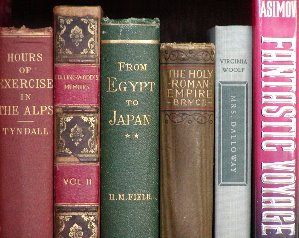
Well, any list of books to inspire and encourage your Simple Quest has to include Walden by Henry David Thoreau ... which is available to be read, in its entirety online for free. As is Ralph Waldo Emerson's essay Self-Reliance.
Not everyone seeking a Simple Life is a transcendentalist, however. Those interesting in simplifying life run the gamut -- for example, spiritually-speaking, Jews and Christians and Hindus and Buddhists all can be, and are, participants in the simplicity lifestyle.
Much can be said for The Razor's Edge by W. Somerset Maugham as well as Pathways to Bliss by Joseph Campbell, and The Story of My Life by Helen Keller. Heck, I get a lot from the Wizard of Oz, if you must know - as well as anything by PG Wodehouse. Laughter is good.
Personally, I found Joyce Meyer's Approval Addiction: Overcoming Your Need to Please Everyone and Stephen Covey's Living the 7 Habits: the Courage to Change both to be very helpful.
January 16, 2006
Books About Simplicity
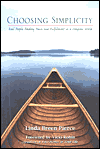
There are several books to read when considering simplifying your life, or honing those skills and moving forward even more. Among them:
Choosing Simplicity: Real People Finding Peace and Fulfillment in a Complex World by Linda Breen Pierce. This book collects stories from those who have downsized their lives, and relates their experiences and whether or not they regret the change. This makes it a bit different from those giving tips and counsel on HOW to simplify. Here, the author conducted a study and writes about those who have actually simplified. A good read.
Your Money or Your Life: Transforming Your Relationship with Money and Achieving Financial Independence by Joe R. Dominguez and Vicki Robin. This is the must-read choice for any Simplicity bookshelf. It's the cornerstone, the landmark, the Big Kahuna of your reading choices.
The Complete Idiot's Guide to Simple Living. Yes, there is one.
Living the Simple Life : A Guide to Scaling Down and Enjoying More by Elaine St. James. Good tip book - some you may like more than others (it's easier to cancel the paper than it is to eat the same meals, week after week) but it is one that you'll go back and re-read, and learn more each time.
Voluntary Simplicity, Revised Edition: Toward a Life that is Inwardly Simple, Outwardly Rich by Duane Elgin. History of the movement, discussion of spiritual motivations behind downsizing. Another Must-Read.
The Simple Living Guide by Janet Luhrs. Talks about choices. Simple living as making conscious choices: you can still wear designer if that's your preference, but you buy your duds in places other than the mall. Helps to understand the wide variety of lifestyles available within the "voluntary simplicity" world.
Others to check out:
Affluenza: The All-Consuming Epidemic by John de Graaf, David Wann, Thomas H Naylor.
Twenty-First Century Economics: Perspectives of Socioeconomics for a Changing World edited by William E. Halal and Kenneth B. Taylor.
January 11, 2006
Affluenza - the Movie and its Sequel
Affluenza was first shown on PBS and developed such a following that a sequel was made, Escape from Affluenza. PBS offers a site page devoted to Affluenza - which includes a fun online quiz, if you like that sort of thing (I do).
Buying a copy of the movie is surprisingly expensive: amazon.com offers the original for almost sixty bucks. The sequel is listed on amazon.com, as well, with three buyers waiting and no copy for sale.
If you live in the Seattle area, the original was shown together with the Walmart movie this past November at Camp Long. Googling the movie's name reveals periodic showings around the country; however, nothing on the shelf at the San Antonio Public Library.
So I'm requesting the librarians there check into it, and hoping for a repeat on PBS sometime soon.
Buying a copy of the movie is surprisingly expensive: amazon.com offers the original for almost sixty bucks. The sequel is listed on amazon.com, as well, with three buyers waiting and no copy for sale.
If you live in the Seattle area, the original was shown together with the Walmart movie this past November at Camp Long. Googling the movie's name reveals periodic showings around the country; however, nothing on the shelf at the San Antonio Public Library.
So I'm requesting the librarians there check into it, and hoping for a repeat on PBS sometime soon.
January 9, 2006
SuperSize Me
Supersize Me is not a new film - but definitely one that's worth your time. Having been nominated for an Academy Award for Best Documentary in 2004, and winning awards at the Sundance Film Festival as well as from the International Press Academy and the Writers' Guild of America, its reputation for quality is well established.
How does it help simplify your life? By helping you avoid fast food, which is bad on your budget and on your body. The film encourages an appreciation of the simple ideas of cooking at home, of knowing what you're actually eating, and of understanding how the nutritional value of your food impacts the quality of your life.
Get the DVD, used, for under ten bucks at amazon.com. Or better yet, rent it for free at your local library. (The San Antonio Public Library alone has 20 copies on its shelf.)
How does it help simplify your life? By helping you avoid fast food, which is bad on your budget and on your body. The film encourages an appreciation of the simple ideas of cooking at home, of knowing what you're actually eating, and of understanding how the nutritional value of your food impacts the quality of your life.
Get the DVD, used, for under ten bucks at amazon.com. Or better yet, rent it for free at your local library. (The San Antonio Public Library alone has 20 copies on its shelf.)
The Walmart Movie
The Walmart movie everyone is talking about has an unusual distribution method: in all probability, you can see it for free somewhere in your local area. Entitled "The High Cost of a Low Price," the film's site allows you to input your zip code, and the site responds with a listing of times and locations for the next showing near you. You can also buy a used DVD at amazon. com for less than ten bucks.
Subscribe to:
Posts (Atom)
