Organizing and consolidating information dealing with simplifying life since January 2006, to help those considering a lifestyle change as well as those expert at living an abundant life in a frugal way.
November 11, 2017
Resistant Starch and Gut Health: Pasta, Rice, and Potatoes Are Cool Again
September 29, 2017
Walmart vs H-E-B Price Comparison: Guess Who Wins?
Winner: Walmart. No contest.
1. Bragg’s Apple Cider Vinegar (with the mother) 32 oz.
- Walmart $5.98
- H-E-B $6.16
2. Dannon Oikos Triple Zero Mixed Berry Four Pack
- · Walmart $3.47
- · H-E-B $3.57
3. Nabisco Triscuit Crackers Reduced Fat 8.0 oz.
- · Walmart $2.56
- · H-E-B $2.64
4. Seedless Red Grapes, 1 Lb.
- · H-E-B 0.87 per pound
- · Walmart 1.88 per pound
5. Dole Salad Spring Mix, 10.0 OZ (Clamshell Container)
- · Walmart $4.68
- · H-E-B $5.13
6. Chicken of the Sea Chunk Style Pink Salmon In Water,5 oz
- · Walmart $1.22
- · H-E-B $1.26
7. Smartfood Popcorn, Variety Pack, 0.5 Oz, 20 Ct
- · H-E-B $6.16
- · Walmart $6.98
8. DiGiorno Rising Crust Pepperoni Pizza, 27.5 oz
- · H-E-B $5.47 and Walmart $5.47
9. Stevia in the Raw Zero Calorie Sweetener Packets, 50 each
- · Walmart $2.77
- · H-E-B $2.85
10. Sara Lee Delightful 45 Calories Healthy Multi-Grain Bread
- · Walmart $2.84
- · H-E-B $2.93
11. Lactaid Reduced Fat 2% Milkfat Milk, 96 oz
- · H-E-B $5.84 and Walmart $5.84
12. General Mills Multi-Grain Cheerios, 18 oz
- · Walmart $3.28
- · H-E-B $3.48
13. Nutella Hazelnut Spread with Skim Milk & Cocoa, 13 oz
- · Walmart $3.48
- · H-E-B $3.58
14. Oreo Sandwich Cookies, Chocolate, 14.3 Oz
- · Walmart $2.98
- · H-E-B $3.07
15. Prego Traditional Pasta Sauce,24 oz
- · Walmart $1.84
- · H-E-B $1.90
August 31, 2017
Food Prices: Comparing My Groceries in 2008, 2011, and 2017
Comparing 10 Grocery Items: Prices in 2008, 2011, and Today
Dole Yellow Bananas (higher)
Small Limes (non-organic) (same)
Store Brand Cage Free Brown Eggs – One Dozen (more than 2008, less than 2011)
Silk Unsweetened Soy Milk -- Half Gallon (more)
Store Brand 98% Fat Free Cream of Mushroom Soup (more than doubled in price)
Store Brand Canned Diced Tomatoes 15 oz. (a penny less than 2011)
Regular Ground Beef Chuck 70/30 – One Pound (more)
Suave Invisible Solid Powder Deodorant (more than 2008, less than 2011)
Store Brand Frozen Green Sweet Peas - 16 oz. bag (non-organic) (more)
Barilla Plus Multi Grain Rotini Pasta (more than 2008; two pennies more than 2011)
October 6, 2016
Thanksgiving Day is 48 Days Away: Planning Ahead
.
Thanksgiving is such a wonderful holiday. I hate that it seems to get lost between Halloween and Christmas - or at least that's how it seems out in the stores.
I saw Halloween stuff competing with Christmas decorations in the last week of September! Ye Gads.
Meanwhile, maybe some would say I'm just as bad. Why? I'm doing menu planning now. For Thanksgiving. Forty-eight days in advance. Yepper -- crazy, right?
Planning Ahead for Turkey Day
Well, here's the thing. I'm participating in National Novel Writing Month in November, so I need to get ready for that added work load. (Which is writing 50,000 words or more in 30 days. I plan on writing a very bad first draft of a thriller novel. LOL)
But I might be planning for Thanksgiving this week anyway.
Why Plan for Thanksgiving Now?
.Why? It's gonna save me money and time and stress. And it makes me happy.
That is Simple Living, at least in my view.
How is it saving me money and time? Well, I'm planning the whole weekend. Bill will provide his famous hash brown and egg tacos, that's a tradition. There will be leftovers. Natch.
No one in this casa cares about Black Friday, so no worries there. Well, if there's an online special for a TV or laptop for a penny or a dollar, we might be a little interested. Maybe.
Football may be involved. To me, this means snacks. Walks in the park will occur. Naps. Soup. Movies. Fingers crossed, we'll have sweater weather!
Today, I'm going to have all the recipes together, including the snacks and the drinks, right in front of me. I'm buying in bulk at Sam's Club -- and watching the food ads -- for things I can store or freeze and have ready come T-Day.
I'm looking for deals. (Yesterday, I found a nice price for pecans at HEB.)
I'm keeping the recipes simple, too. No Bon Appetit here. Simple stuff. Good stuff.
Plus not so many choices. Two desserts. One kind of coffee. Chips and queso. Turkey Chili. Iced Tea. You get the idea.
I'm excited thinking about Thanksgiving. Counting blessings; eating queso while watching an Alfred Hitchcock movie; the turkey-induced nap.
I'm plotting things that are fun and free. Walking in the park, bringing bread to feed the ducks and geese while the dogs sniff the goose poop? This costs nothing and it's amazing. Memory-making.
Ditto the movie night with popcorn and classic movies. At some point, there may be watching sports on TV; I never do this -- but I'll be writing that thriller novel. As long as no one is hogging the chili con queso, we'll all be fine.
Oh, my, this is fun!!! I like this planning ahead plan. It makes me happy. Maybe it will bring a smile to your face, too, Dear Reader.
August 23, 2014
Food Reconditioning: Is This Taking Frugal a Step Too Far?
Food reconditioning - heard of it? You may not want to know; ignorance is bliss ....
Food reconditioning is not something that’s discussed much in food marketing campaigns much less referenced in grocery store advertising, but it’s real. And it sounds pretty horrible.
Food reconditioning is a way to maximize profits by re-purposing food that has not been sold because it’s past the expiration date, or it’s got some other problem. Like mold or bugs or something. Yes, you read that right. Insects. Mold. Food that's BAD and you wouldn't buy (and you'd return if you did).
I assumed this stuff got thrown out by my local HEB or Walmart or Target, but apparently NOT. Nope; instead there’s all this “food reconditioning” going on, in some dark and secret place.
The Food and Drug Administration knows all about it; it’s okay with the FDA, though the reconditioning has to conform with the FDA’s compliance policies.
What is Food Reconditioning?
Apparently, when the store pulls something from its shelves, that stuff isn’t trashed. It’s returned to the place it came from — and the supplier gets to deal with it.Does the supplier toss it? Nope, they’re watching their bottom line and to toss that product means lost money. Instead, the supplier revamps that returned item into something else that can be sold back to the grocery store, and then sold to you.
Examples of food reconditioning include:
- Chocolate ice cream that results from bad batches of other stuff because the strong flavor and dark brown color are good for hiding lots of things
- Applesauce that has been zapped with heat to remove the MOLD that had been in it before it was ‘reconditioned’
- Rice and other grains repackaged and resold after being sifted to remove the insects and bugs that were discovered in it.
Frugal Food Reconditioning at Home
Now, I’m all for food reconditioning at home. You betcha. That’s what leftovers are all about.- Leftover chicken breast becomes chicken salad;
- Meatloaf on Sunday turns into meatloaf sandwiches on Monday;
- Old bread is great “reconditioned” into bread pudding;
- Bananas past their prime become banana nut bread or once frozen, the stuff of smoothies.
But this idea that food suppliers are taking old food or yucky stuff that no one would buy at the get-go and re-purposing it into something else, without our knowledge and (of course) without any price reduction on the Altered State stuff — well, it sort creeps me out.
How about you?
October 14, 2013
Food Expiration Dates: New Harvard Study Suggests Changes to Food Dating, Stop US Food Waste
Not that I always respect that date; for example, “sell by” to me doesn’t mean much if I brought something home and immediately tossed it in the freezer. (Which is a great thing to do, by the way: buy something on sale, then freeze it until you’re ready to use it.)
Harvard University Study Reports Americans Waste 160 Billion Pounds of Food Every Year
A new research study has been published by Harvard University’s Food Law and Policy Clinic and the Natural Resources Defense Council, entitled “The Dating Game: How Confusing Food Date Labels Lead to Food Waste in America.” (Click on the link to read the entire study online for free.)
According to this new study, “[a]n estimated 40 percent of food in the United States goes uneaten,1 and according to even the most conservative estimates, Americans waste 160 billion pounds of food each year.”
That is a heck of a lot of food -- and a shameful amount of waste.
One of the big problems, according to these researchers? Food dating.
Expiration dates on food in the United States are causing lots of good food to go to waste.
They are suggesting that lots of this waste could be stopped if the Food Dating system in the United States was standardized across various food industries as well as making the food labels we all read much easier to understand.
I agree. Making those food dates easier to understand would be a great thing. (Remember how you used to be able to figure out how fresh a loaf of bread was by the color-coded tag? No more; you can’t count on the color to tell you anything much any more.)
For instance, the Harvard Study reveals that there’s nothing unsafe about food that is past the “sell by” food date — that date doesn’t have anything to do with the safety of the food itself; it’s an inventory control date for the store to control what’s on its shelves. Wow.
And, here’s a biggie: eating something well before the “sell by” food date doesn’t inherently mean that it’s all fresh, and good, and safe for you to eat. Nope. Things like how it was stored are a big factor here.
What about the “use by” food date code? The “use by” food date does not give you dependable information on how microbiologically sound that food product may be — that’s dependent on how the product has been manufactured, distributed, and stored for you.
Not All Food Is the Same: Food Dating Systems Should Reflect Ready-to-Eat Versus To-Be-Prepared
Another big factor here: not all food is the same and they’re not suggesting that there not be universal one-size fits all food dating. Refrigerated ready-to-eat food is more risky for bacteria, for example, than something you have to bring home and cook. Why? The heat may kill dangerous bacteria in the food that the ready-to-eat item might share, but it’s not going to get zapped by heat before you eat it.
There’s lots more in the study. It’s worth your time to read. Now, I’m going to go get a snack.
May 21, 2012
Salt in Your Coffee Can Be a Really Good Idea. Or Not.
I don't remember where I learned about putting a smidge of salt into your coffee before you brew it, but it works. It makes cheap coffee taste better. It makes any coffee taste better, actually, because it takes away the bitterness.
Nope, I'm not blowing smoke here. It's actually grounded in science and you can go read about that here, if you know or care what salt's "Na+" means and what that does to coffee.
Problem is, you can't get heavy-handed with the stuff. It's a very, very small step to go from a smooth cup of joe to a nasty mug of salty mess. Very, very small.
Which is what I had this morning, as I got a bit too friendly with the salt shaker while brewing a big pot of coffee to drink while waiting for the washer repairman. (I don't own a Maytag.)
It did wake me up, though. Shock therapy.
P.S. Hat tip to Debra Bruce on Twitter -- she asked how much I use, so I went to my kitchen tool drawer and messed around with the measuring spoons. This was easy, considering I was in the front of the house on my laptop, one eye on vigilant lookout for the repair guy. Anyway, thinking that measuring spoons were better to use as a measurement than what I really do, which is shake till I see the right amount of white on the top of the brown coffee in the coffee brew basket, I figure 1/8 teaspoon per cup. Might be less.
Shake for yourself, let me know. (@rebakennedy)
March 13, 2012
Cheap Protein Sources to Consider When Planning Your Menu and Making Your Grocery List
These folk may not know how to cook, and they may be bummed that they have to cut back. To them, I say - hey, there's a silver lining here! There's fun in your future that you wouldn't have found if you hadn't had to start budgeting things.
Like learning all about cheap protein sources and using them in your menus. There's some major good eating here as well as some very healthy things for you and yours, which someone who's eating out a lot or buying lots of prepackaged stuff or fast food take out is going to miss.
Cheap Sources of Quality Protein
The reason that you want to know cheap sources of protein is because protein can take the biggest chunk out of your monthly food budget. Meat - beef, pork, chicken, fish - costs a lot and you buy it by the pound. To get control of your food money for the month, it's a big target.
The silver lining is while you are buying protein options to beef, pork, chicken, fish that you are also getting some very nutritious stuff. Stuff that can be lots better for you than the steak that you're not buying any more.
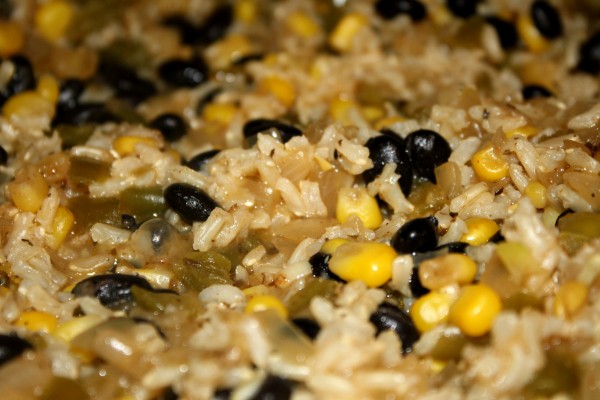
| Black Beans and Rice Dish | Public Domain Image |
- Eggs - 4 grams per large, fresh egg
- Quinoa - 8 grams in a serving
- Whey Protein Powder - 19 grams per 1 cup
- Milk - 10 grams in a serving of nonfat, protein fortified
- Cottage Cheese - 28 grams in 1 cup, lactose reduced
- Greek Yogurt - 16 grams in 6 oz serving (I like Chobani Vanilla Nonfat with stevia added to it)
- Beans and Rice - 9 grams in 1 cup of rice and beans combo
- Soy Products - 68 grams in 1 cup of soy nuts
- Tempeh - 31 grams in 1 cup
- Almonds 6 grams per ounce
And if you have to buy meat, then consider these two options before you go over to the Meat Department:
- Canned Tuna in Water - 39 grams in 1 cup of solid white tuna in water, drained
- Canned Mackerel - 44 grams in 1 cup of mackerel, jack, drained
- Canned Sardines - 23 grams in 1 can of sardines packed in oil, drained
Just because a food item has lots of protein in it, you're not done. Another consideration is whether or not it has all NINE essential amino acids in it, which then makes that food a "complete protein."
Of the items listed above, only the canned meat, the soy stuff, and the quinoa are complete proteins. Which doesn't mean that the others aren't great, too .. just something to consider.
And yes, you can combine things to make a complete protein. Rice and beans together, as shown above, make a complete protein. So does smearing almond butter onto toast.
Here's the Thing: This Stuff Tastes Great.
Almonds? They're great. Raw, in salads, pureed into butter. Major yum here. Red beans and rice, or what we have here in San Antonio, pintos and rice? Great stuff.
The greek yogurt is addicting, at least for me, when you add some stevia for sweetness and some pumpkin pie spice to the nonfat vanilla flavor. Better than ice cream for dessert and I am not kidding you or deceiving myself. Try it for yourself.
Quinoa? I cook this in the microwave after learning about this on a Melissa D'Arabian show and it works great. (Try her recipe which has 100 five star reviews at the time that I inserted this hyperlink for her lentil quinoa salad.) And you can buy this seed, it's not a grain, made into all sorts of pasta shapes at World Market, among other places. Elbow. Spaghetti.
You get the idea. Simple living is just filled with all these discoveries. You really do say "wow" a lot, and I'm still doing it after all these years. It's fun!
January 21, 2012
I Miss My Milton's MultiGrain Bread - Because It Will Go Moldy
Here's the thing: not only is this bread vetted by WholeFoods and the American Heart Association, it tastes really good and you can actually see the seeds and nuts that are a part of the recipe.
Plus, and Dear Reader, this may sound yucky but it's the truth nevertheless: this bread goes bad quick. You can't just leave it in a bread box or setting on the counter and expect it to be just fine whenever you get around to grabbing a slice or two. No, no, no. Do that, and you're gonna find mold. That's right: mold.
Which sounds bad, but it's good. Why? Fresh food goes bad. Food with preservatives does not. Well, maybe eventually - but it will take awhile.
For example, take a slice of white bread and a slice of Milton's and place them side by side on the counter. Leave them there. Milton's will get icky pretty darn quick. Toss it. Then, keep count on how many days .... or weeks ... it takes for that other piece of bread to go bad. And it may never get mold on it; it may just dry out.
Yes, I've done this -- Milton's vs a slice of thick white store brand "Texas Toast" bread that my friend Bill likes to use for sandwiches.
The dried out white bread slice might be less icky ... but think about it. All those preservatives keep that white bread slice from getting green mold all over it, but do you want to have all those preservatives in your body? Or your kids?
Bacteria isn't bad. That's why Jamie Lee Curtis is selling you that yogurt and why you're reading more and more about probiotics.
And that's why I prefer Milton's MultiGrain and I'm thinking about contacting the company to find out where I can buy their product here in San Antonio (the search function on their web site for my zip code tells me nowhere, but I'm not giving up yet).
January 6, 2012
Television Benefit: Melissa D’Arabian and Her Ten Dollar Dinners – Great Food Fast and Cheap
Television. It can be so good or so bad, depending upon how you use it. I suppose this is true for most things, now that I think about it. One of the great things about TV for me, at least, are the cooking shows. I have truly learned how to cook from watching PBS shows like America’s Test Kitchen and other channel shows (I like Mad Hungry but I don’t follow it regularly).
However, there is one cooking show that I think stands head and shoulders above the rest, from a simplicity perspective. It delivers on a promise to feed four a complete dinner for ten bucks and with good, tasty food to boot.
It’s Ten Dollar Dinners with cook Melissa D’Arabian on the Food Network.
What’s the big deal?
Well, the recipes don’t taste good, they taste great. And they don’t take many ingredients. (Good for time and for money.) And they are easy to put together. It’s simple living in a kitchen.
Now, you can follow the recipes online or in Melissa D’Arabian’s cookbook and that’s fine. That will get you there. There’s an added benefit of watching her TV shows, though. Maybe more than one.
In her show, where she’s cooking a $10 Dinner on the TV screen, Melissa D’Arabian adds tips and tricks that are great and that you don’t get in the books or recipes. Thinks like buy up Italian sausage when it’s on sale and freeze it. Buy milk that’s about to hit its expiration date by going to the grocery store early in the morning (she goes around nine o’clock) – if your family drinks dairy.
You get the idea, Dear Reader.
I am a big, big fan of Ten Dollar Dinners and Melissa D’Arabian and I think, Dear Reader, you might like what she’s doing, too.