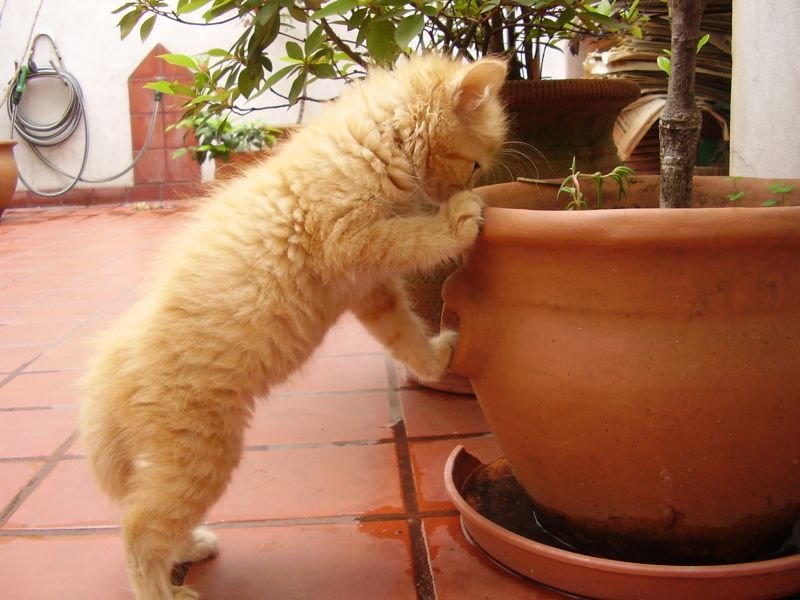
 Cats may be more interested in a yarn ball than a rawhide bone, but they deserve their treats, too. There are several sites with recipes for homemade cat goodies: the crispy liver treats at petplace.com is just one of several easy offerings; cdkitchen.com includes a treat for older cats, as does Minnie; and divine recipes has one recipe that looks easy and a cat's version of ice cream, and Rebecca's Soap Deli has a nice one, too.
April 12, 2006
Homemade Cat Treats
Cats may be more interested in a yarn ball than a rawhide bone, but they deserve their treats, too. There are several sites with recipes for homemade cat goodies: the crispy liver treats at petplace.com is just one of several easy offerings; cdkitchen.com includes a treat for older cats, as does Minnie; and divine recipes has one recipe that looks easy and a cat's version of ice cream, and Rebecca's Soap Deli has a nice one, too.
April 10, 2006
Homemade Dog Treats
 Rather than buying your dog those rawhide bones or multi-colored dog biscuits, you can make dog treats at home - better for your pet, better for your budget.
A big carrot serves the purpose of a rawhide bone, for example. Big enough to carry around, and sturdy enough for some good chewing time. Peanut butter - wiped onto the carrot, the dog bowl, your finger ... another great treat that's nutritious and inexpensive. Bits of cheese can be dog nirvana.
For recipes to make actual cookies, hard biscuits, and things, there are several sites with nice collections: stretcher.com has a few, bullwrinkle.com has a long list, and gwi.com promises all of their recipes to have already been kitchen-tested and dog-approved.
April 7, 2006
What "Organic" Means
 More and more grocery shelves are filled with products labelled "100% Organic," "Organic," "Free-Range," "Hormone-Free," and "Natural". What's the difference?
Organic food is grown, handled, and processed differently than commercially-processed food. Organic farmers use renewable resources, and they try and conserve their land's soil and water. Organic animal products (meat, poultry, eggs, dairy) come from animals who have never ingested antibiotics or growth hormones. Organic food does not come in contact with conventional pesticides; fertilizers made with synthetic ingredients or sewage sludge; bioengineering; or ionizing radiation.
Since October 2002, the US Government has offered the voluntary label of "organic" to those producing and selling organic products. However, before something is labeled "organic," a federal certifier inspects not only the product, but also the farm where the food originates to make sure all USDA organic standards have been met, as well as all the companies that handle or process the food before it gets to the supermarket or restaurant. The name and address of the Government certifier will be shown on all packaged products that are 70%-100% organic.
Those products meeting the certification standards can be identified by the word "organic" which will appear on either a small sticker showing the USDA Organic seal (shown above) on the food item, or upon a nearby display sign. If you see the seal, you know that the product is 95-100% organic.
Additionally, the products should identify their percentage of organic content. 100% organic products say so. 95-100% organic items label themselves "organic" without a percentage. Those with 70-95% organic can identify their organic components (e.g, "made with organic oats"). Less than 70% organic, then their specific, organic ingredients will be shown on the side panel of the package, but there cannot be any organic claims on the front of the package.
What about those other labels: natural, or free-range, or hormone-free? They may be true. But these descriptions do not mean that the product is "organic."
Source: USDA.GOV
Subscribe to:
Posts (Atom)
